Tarangire National Park is paid entry, with gates open daily from 6:00 am to 6:00 pm and no driving inside after dark. Adult conservation fees run US$50 plus 18% VAT (about US$59) in peak season, dropping to US$45 plus VAT from mid-March to mid-May — and the gate takes cards only, never cash.
Tarangire National Park opens every day of the year, with gates operating from 6:00 am to 6:00 pm. There's no seasonal change to these hours — only the fees shift, dropping for low season from 15 March to 15 May. Vehicles must be off the roads by dark, so plan your exit before the 6:00 pm closing.
Swipe to see more
| Day | Hours | Note |
|---|---|---|
| Monday–Sunday | 06:00–18:00 | Gates open daily, year-round. A few sources (including Frommer's) list 6:30 am–6:30 pm, but plan on 6:00. Day-trip permits cover 12 daylight hours with multiple gate entries allowed. |
Tarangire doesn't close for public or religious holidays — the gates run 6:00 am to 6:00 pm every day of the year. Nothing in the TANAPA tariff or park rules singles out Christmas, Easter or Eid for changed hours. The only calendar date that matters is 15 March, when the low-season entrance fee kicks in (US$45 plus VAT instead of US$50, running to 15 May) — a price change, not a schedule one. Note that mid-March to May is the long rains, when some camps inside the park close independently of the gate hours.
Entry costs US$50 per non-East-African adult per day in peak season (16 May–14 March), which comes to about US$59 once TANAPA adds 18% VAT at the gate. Low season (15 March–15 May) drops to US$45 (≈US$53.10 with VAT). Payment is strictly electronic — credit card, TANAPA Smart Card or the TanapaGo app — and fees are non-refundable.
Swipe to see more
| Category | Price | Note |
|---|---|---|
| Adult (non-East-African, 16+) | US$50 peak (≈US$59 incl. VAT) / US$45 low season (≈US$53.10 incl. VAT) | Peak runs 16 May–14 March; low season 15 March–15 May. Per person per day. |
| Child (non-East-African, 5–15) | US$15 (≈US$17.70 incl. VAT) | Per child per day, both seasons. |
| Child under 5 | Free | |
| East African citizen | TSh 10,000 adult / TSh 2,000 child (5–15) | Passport required at the gate; EAC nationals must show one. |
| Expatriate / Tanzania resident | US$25 adult / US$7.50 child (5–15) | Residence permit Class A/B/C or exemption certificate required. |
| Foreign-registered vehicle | US$40/day (up to 2,000 kg) / US$150/day (2,001–3,000 kg) | Open-sided vehicles pay 50% more. Charged on top of per-person entry. |
| Camping | US$30 public campsite / US$50–60 special or seasonal campsite | Per adult per night; special campsites need advance booking and cost more in peak season. |
| Night game drive | US$50 adult / US$25 child | Book ahead with park HQ; typically starts around 8:00 pm, after gates close. |
| Walking safari | US$20 (1–4 hours) / US$25 (over 4 hours) | Children must be 12+. Armed ranger required. |
| Guide / ranger | US$20 per group per day | Applies to guided activities and required bookings. |
| Lodge concession fee | US$40 per adult per night | Added when staying at a private lodge inside the park, on top of the lodge rate. |
| Commercial filming | US$250 per person per day | Covers entrance, camping and filming, all nationalities. Private 'own-art' video adds US$100 per group per day. |
No regular free entry days, though children under 5 enter free year-round.
Planning your visit to Tarangire National Park? Find tours with free cancellation and skip-the-line options.
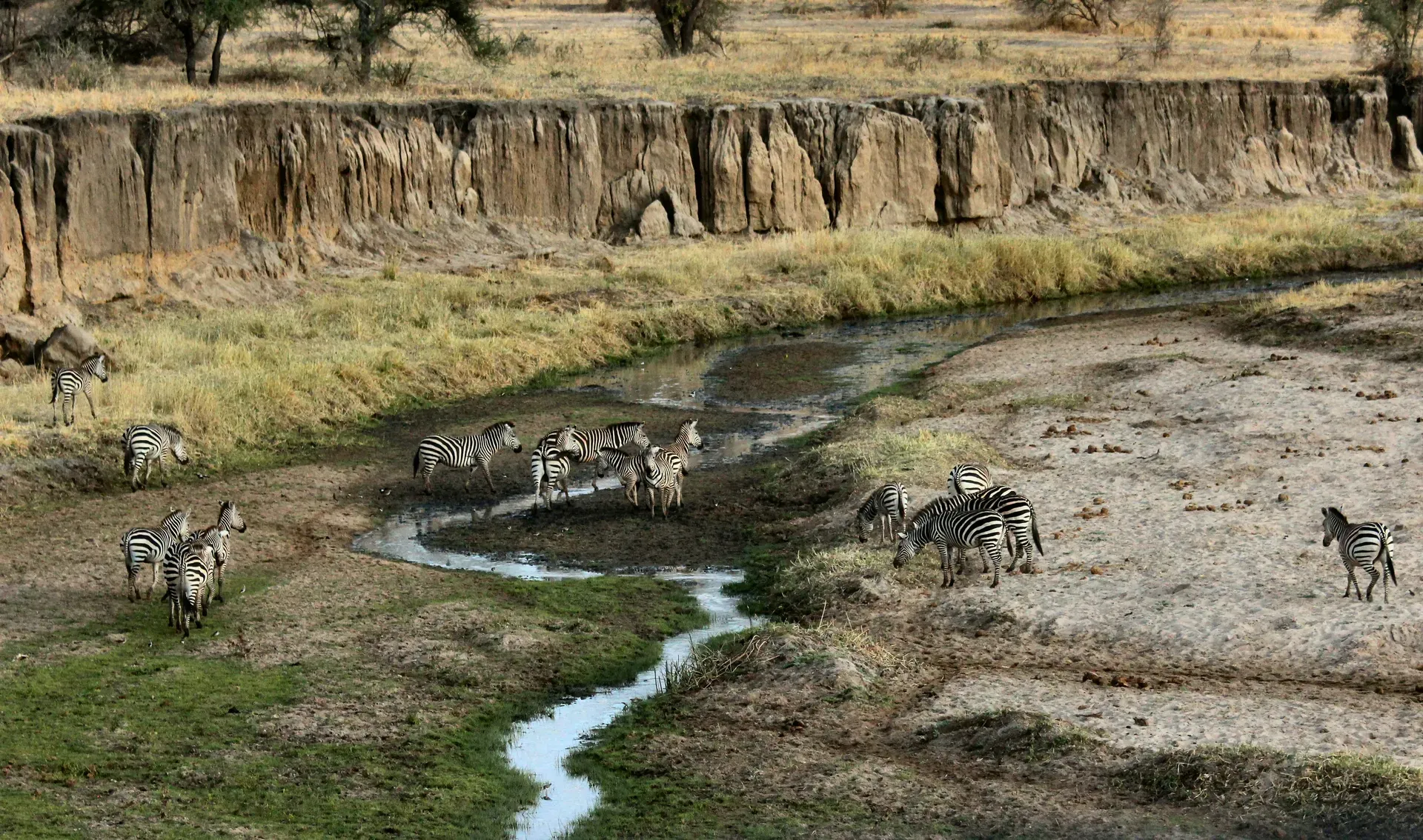
View All ToursJune to October is the best time to visit Tarangire — the long dry season pulls thousands of wildebeest and zebra into the park on their annual migration, and elephant breeding herds of up to 300 gather along the Tarangire River and Silale Swamp, the only reliable water left. Vegetation thins, mosquitoes drop, and the clear skies make it the best photography window too. August has the highest wildlife density and the most vehicles; June and late September–October deliver similar game with fewer crowds.
Swipe to see more
| Period | Crowd Level | Recommendation |
|---|---|---|
| Gate opening (06:00–09:00) | Low | Predators are still hunting in the cool hours and the light is at its best — photographers and anyone wanting the river track to themselves should be at the gate for the 6:00 am opening. |
| Mid-morning (09:00–12:00) | Moderate | Tour traffic builds toward midday, but elephants keep coming to the river to drink and dig waterholes in the sand, so it suits travelers on a relaxed 12-hour day-trip permit. |
| Midday (12:00–15:00) | High | The busiest hours at the river circuit and picnic sites, and heat can be punishing (up to 38°C in January–February) — good for a long lodge lunch rather than driving. |
| Late afternoon (15:00–18:00) | Moderate | Day-trippers head out and animals return to the water; the baobabs silhouette beautifully against the golden evening light, and you must exit before the 6:00 pm gate closure. |
| Night drive (from ~20:00) | Low | A booked night drive (US$50 per adult, arranged with park HQ) runs after the gates close, with rangers spotlighting leopards, genets, bushbabies and hunting lions — ideal for a second safari day. |
One full day is enough for Tarangire's river circuit — the day-trip permit covers 12 daylight hours, plenty of time for the elephant herds and baobabs along the main track. To explore the Silale Swamp and the quieter southern ridges properly, most guides recommend 1–2 nights (2–3 days).
On a northern-circuit itinerary with Lake Manyara, Ngorongoro and the Serengeti, Tarangire usually gets 1–2 nights out of a 4–7-day trip.
Gates open at 6:00 am, and that first cool hour is when lions and leopards are still moving and the light is best for photography — a day-trip permit covers 12 daylight hours and allows multiple gate entries, so arriving at opening means you use every hour you've paid for. Head straight for the Tarangire River track before midday vehicles pile in. Plan your exit too: gates close at 6:00 pm and driving after dark is forbidden unless you've booked one of the park's night game drives.
Tarangire's gates are strictly cashless — pay by credit card, pre-loaded TANAPA Smart Card, or the TanapaGo app, and bring your passport, since ID is mandatory. Fee information online is often outdated, and even TANAPA's own park pages have displayed the Serengeti's US$70 rate instead of Tarangire's actual US$50+VAT adult fee, so trust the official TANAPA tariff and carry buffer funds. For campsites, night drives, and walking safaris, book ahead with park HQ at [email protected] or +255 739 222 685.
June to October is the sweet spot: the Tarangire River and Silale Swamp become the only reliable water, and breeding herds of up to 300 elephants line the banks alongside the July–October wildebeest and zebra migration. August has the densest game but the most vehicles; June or late September–October gets you similar sightings with fewer crowds. Skip mid-March to May — rains turn the tracks to mud and wildlife disperses outside the park, though entry does drop to US$45+VAT (about $53.10).
Tsetse flies are a genuine nuisance in the woodlands, they bite painfully, and they're strongly drawn to black and dark blue — pack khaki, olive, or beige and tuck trousers into socks. Repellent only partly works, so clothing is your real defense. Layer it: July dawn drives sit around 15°C while January–February afternoons can hit 38°C, so a fleece for the morning and a hat for midday both earn their place.
Per-person entry is only part of the bill: foreign-registered vehicles pay US$40 per day up to 2,000 kg, US$150 for 2,001–3,000 kg, and open-sided vehicles add 50%. A US$40-per-adult-per-night concession fee also applies if you're staying at a lodge inside the park. Get your operator to confirm in writing which fees, vehicle costs, and activities are included in your package before you pay the deposit.
Non-East-African adults pay US$50 per person per day in peak season (16 May–14 March), which works out to about US$59 once the 18% VAT is added at the gate. Low season (15 March–15 May) drops to US$45 plus VAT, roughly US$53.10. Children aged 5–15 pay US$15 plus VAT, under-5s go free, and East African citizens pay TSh 10,000 per adult.
No — payment is strictly electronic, by credit card, pre-loaded TANAPA Smart Card, or the TanapaGo app, and a passport or ID is mandatory at the gate. Cash won't be accepted, so carry a card and buffer funds. Fees are also non-refundable, and if you sleep outside the park you pay entry again on each visit.
Gates are open daily from 6:00 am to 6:00 pm (a few sources, including Frommer's, say 6:30 am–6:30 pm), and vehicles may not drive in the park after dark. A day-trip permit is valid for 12 daylight hours and a sleep-over permit for 24 hours, both allowing multiple gate entries. Booked night game drives, usually starting around 8:00 pm, are the one legal way to be out after closing.
Yes — the day-trip permit gives you 12 daylight hours, enough for the main river circuit highlights. Most guides recommend 1–2 nights (2–3 days) to explore the Silale Swamp and the quieter southern ridges properly. On a typical 4–7-day northern-circuit itinerary, travelers usually spend 1–2 nights here alongside Lake Manyara, Ngorongoro, and the Serengeti.
Night drives cost US$50 per adult and US$25 per child (ages 5–15), booked in advance with park HQ. Walking safaris run US$20 per person for 1–4 hours or US$25 for longer walks, with an armed ranger, and children must be 12 or older. Either way, budget US$20 per group per day for the guide or ranger.
Yes — foreign-registered vehicles pay US$40 per day up to 2,000 kg tare, or US$150 per day for 2,001–3,000 kg, and open-sided vehicles pay 50% more. If you're staying in a lodge inside the park, a hotel concession fee of US$40 per adult per night also applies. Ask your operator in writing whether vehicle and concession fees are included in your package.
Low season runs 15 March to 15 May, when entry drops to US$45 plus VAT (about US$53.10) per non-East-African adult. The trade-off is serious: this is the long rains, tracks turn to mud, some camps close, and much of the wildlife disperses outside the park to wet-season calving areas. Birders should look at November–May instead, when migratory species push the 550+ species list even higher.
Browse verified tours with free cancellation and instant confirmation.
Find Tours