Private Tarangire National Park tours give you your own 4x4 vehicle and driver-guide, with hotel pickup from Arusha or Moshi and full-day game drives among the baobab trees and elephant herds. Options range from 6-hour day trips to 2-day safaris with camping inside the park.
 Free Cancellation
Private 12-hour day safari from Moshi to Tarangire with hotel pickup, lunch, and a multilingual guide.
 Free Cancellation
8-hour private Tarangire safari with Arusha hotel pickup, lunch, drinks and park fees included.
 Free Cancellation
Full-day private 4x4 safari from Moshi, with 6 hours inside Tarangire and lunch, water, and all fees included.
 Free Cancellation
Private full-day game drive in Tarangire with hotel pickup from Arusha, lunch, and bottled water.
 Free Cancellation
Private full-day Tarangire game drive from Arusha with lunch, water, and all fees included.
 Free Cancellation
Private full-day Tarangire safari with an English-speaking guide, lunch, and pickup around Arusha town.
 Free Cancellation
Private 2-day, 1-night camping tour with sunrise game drive, all meals, and hotel pickup from Moshi.
 Free Cancellation
Two-day private safari to Tarangire and Ngorongoro Crater with Arusha hotel pickup and five-language guides.
 Free Cancellation
Private 6-hour day trip from Arusha to Tarangire with hotel pickup, guide, and all fees included.
 Free Cancellation
Private 9-hour game drive in Tarangire with lunch, fees, and a German, English, French, or Spanish guide.
Read what travelers share about their experience visiting Tarangire National Park — from practical tips to personal highlights.
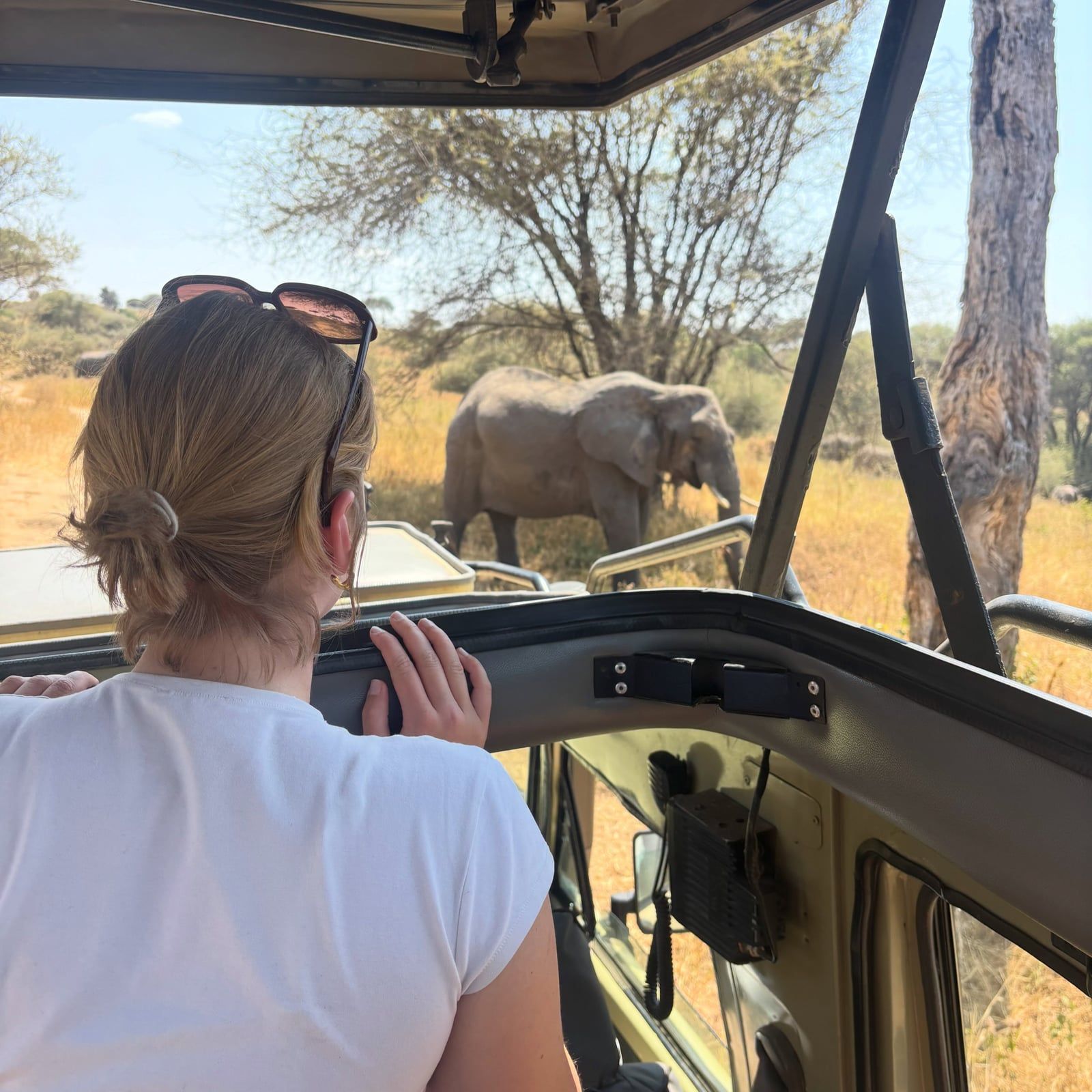
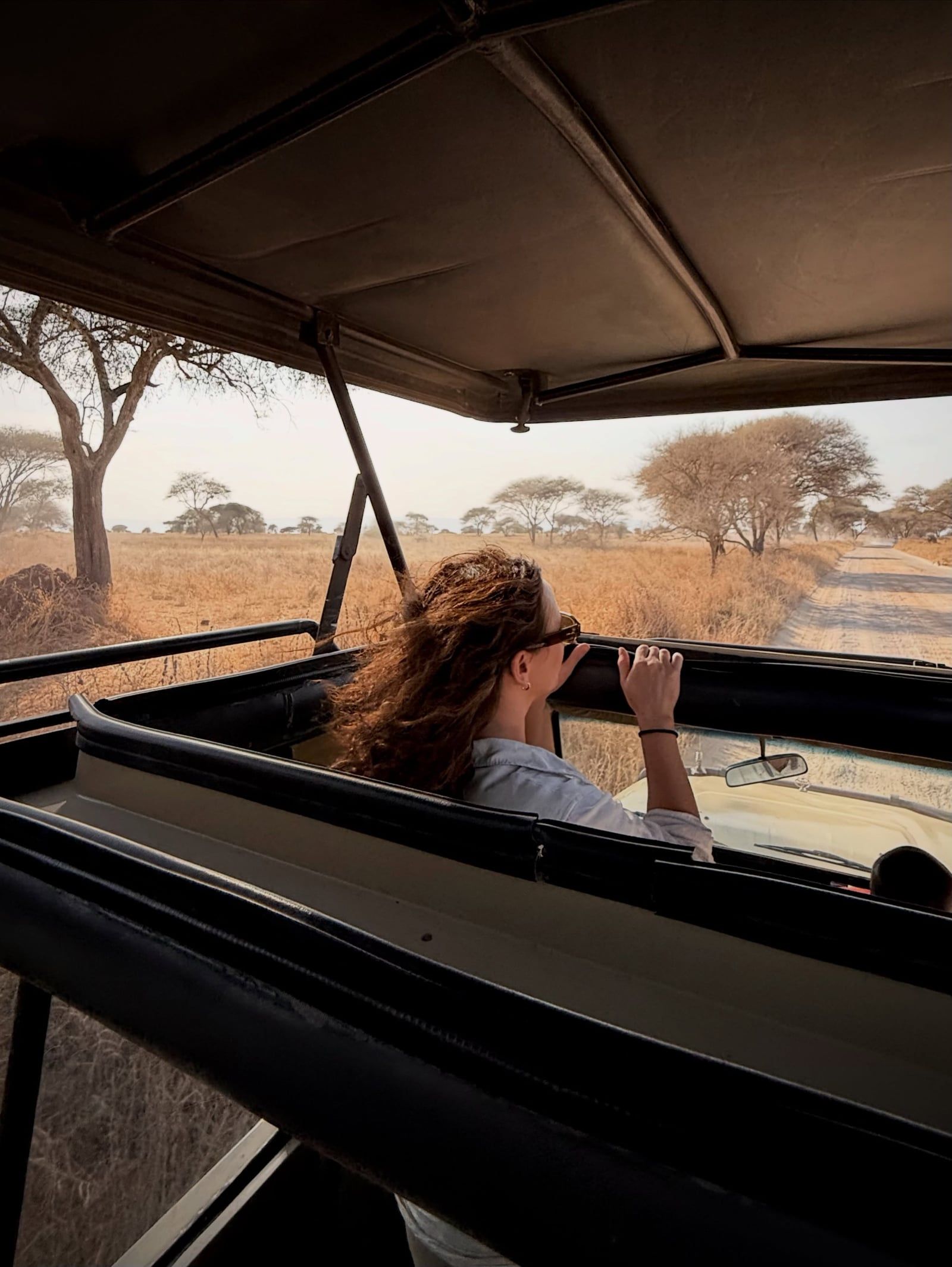
A private Tarangire tour is a full-day game drive in a 4x4 with a pop-up roof: pickup at your hotel around dawn, a two-to-three-hour drive to the gate, then six to nine hours inside the park. The vehicle, the guide and the day's pace belong to your group alone. Most tours leave from Arusha; a few run from Moshi, which stretches the door-to-door day to 12 hours.
Between June and October the Tarangire River is the only reliable water for miles, and breeding herds — some reported 300 strong — line the banks. Watch bulls dig waterholes in the river sand with their feet and trunks. Calves wobble between the adults; the big tuskers don't move for anyone.
Adansonia trees with trunks over 100 ft in circumference stand across the plains. Elephants strip their fibrous bark, leaving pale scars that heal into gnarled patterns. Evening light along the main river track turns the silhouettes black against gold — the shot most photographers come for.
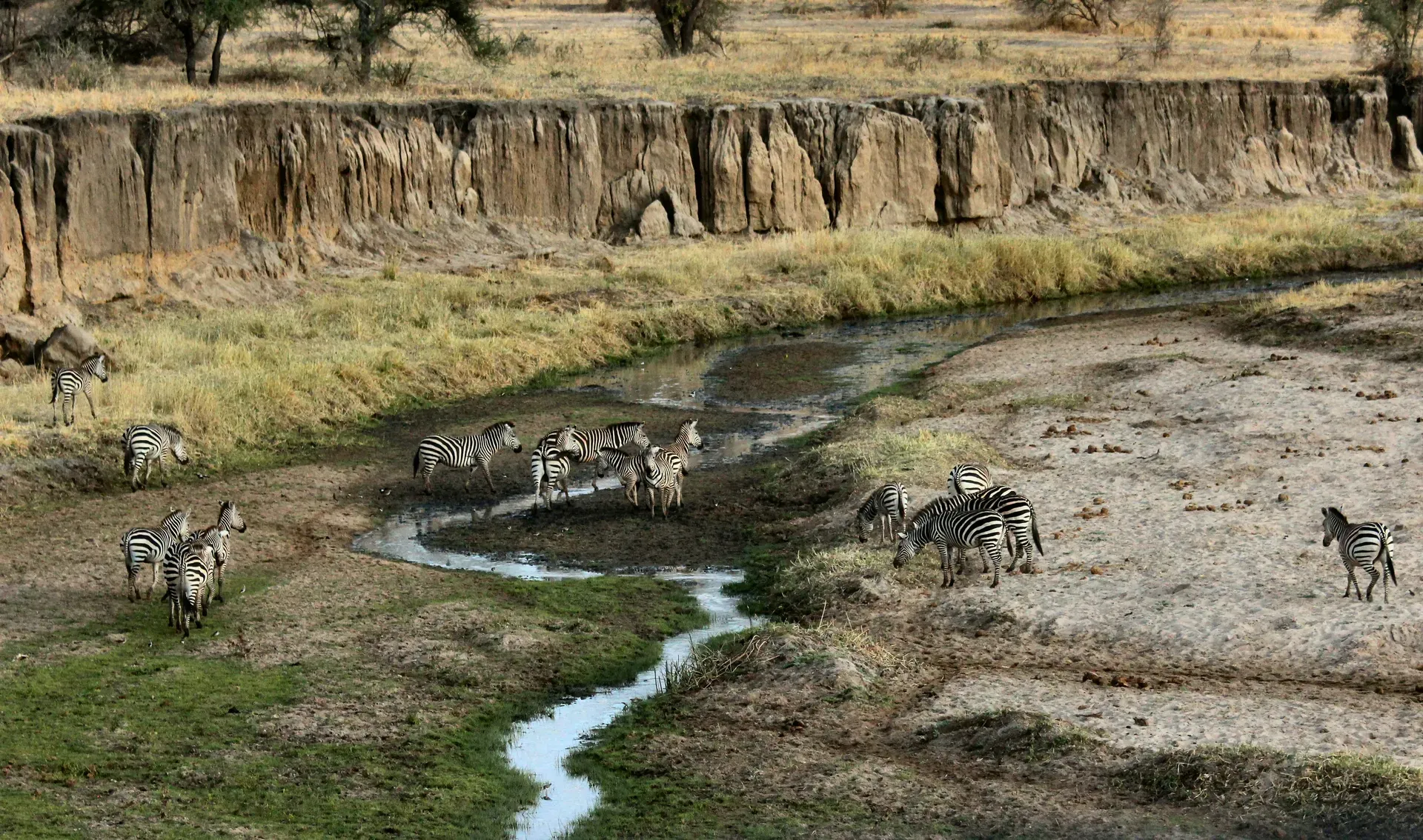
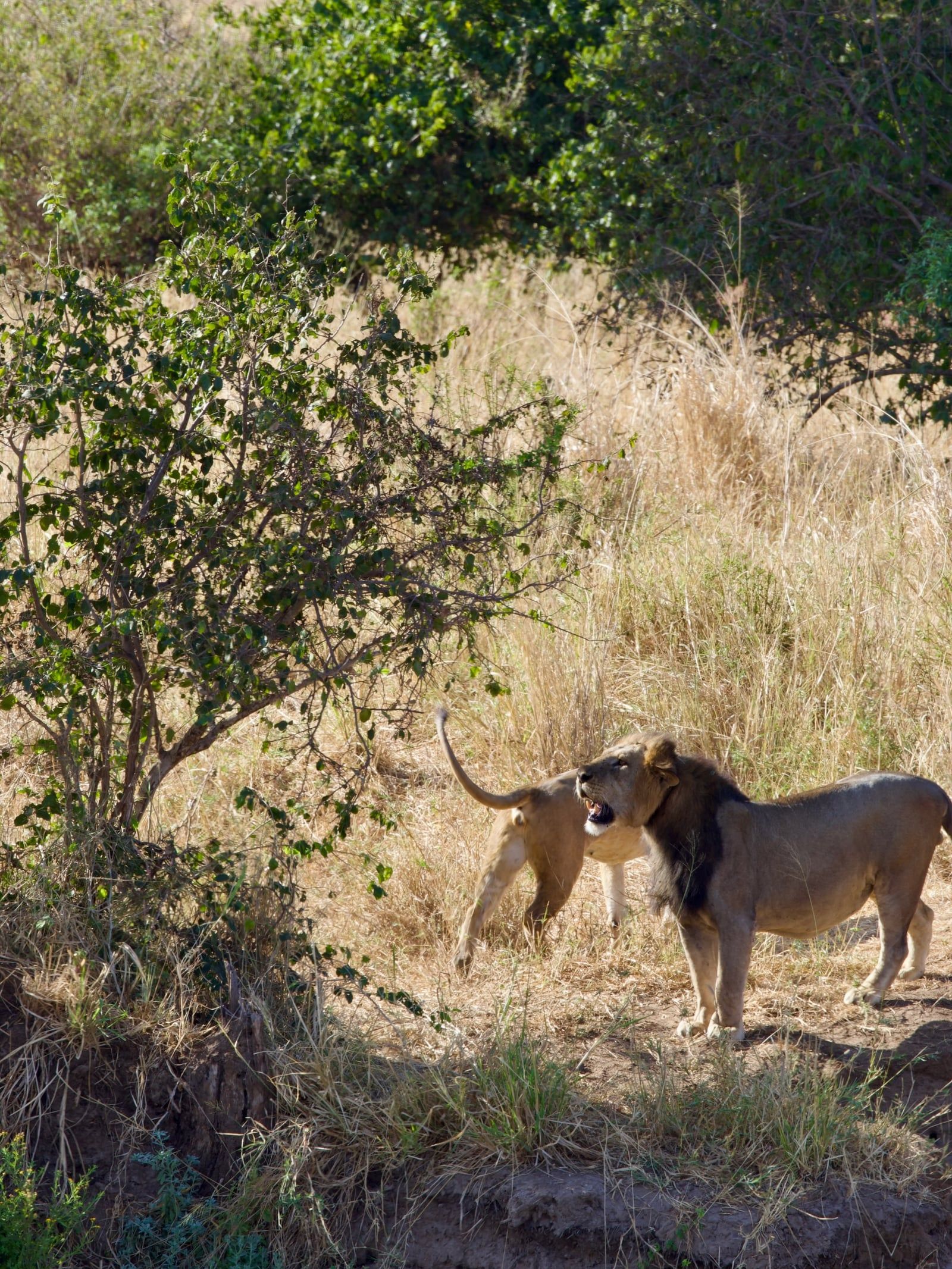
From July, wildebeest and zebra that calved outside the park funnel back in toward Silale Swamp, joining huge buffalo and elephant herds. Predators follow the herds in. This is the densest, most reliable big-game theatre in the park, and August is its peak.
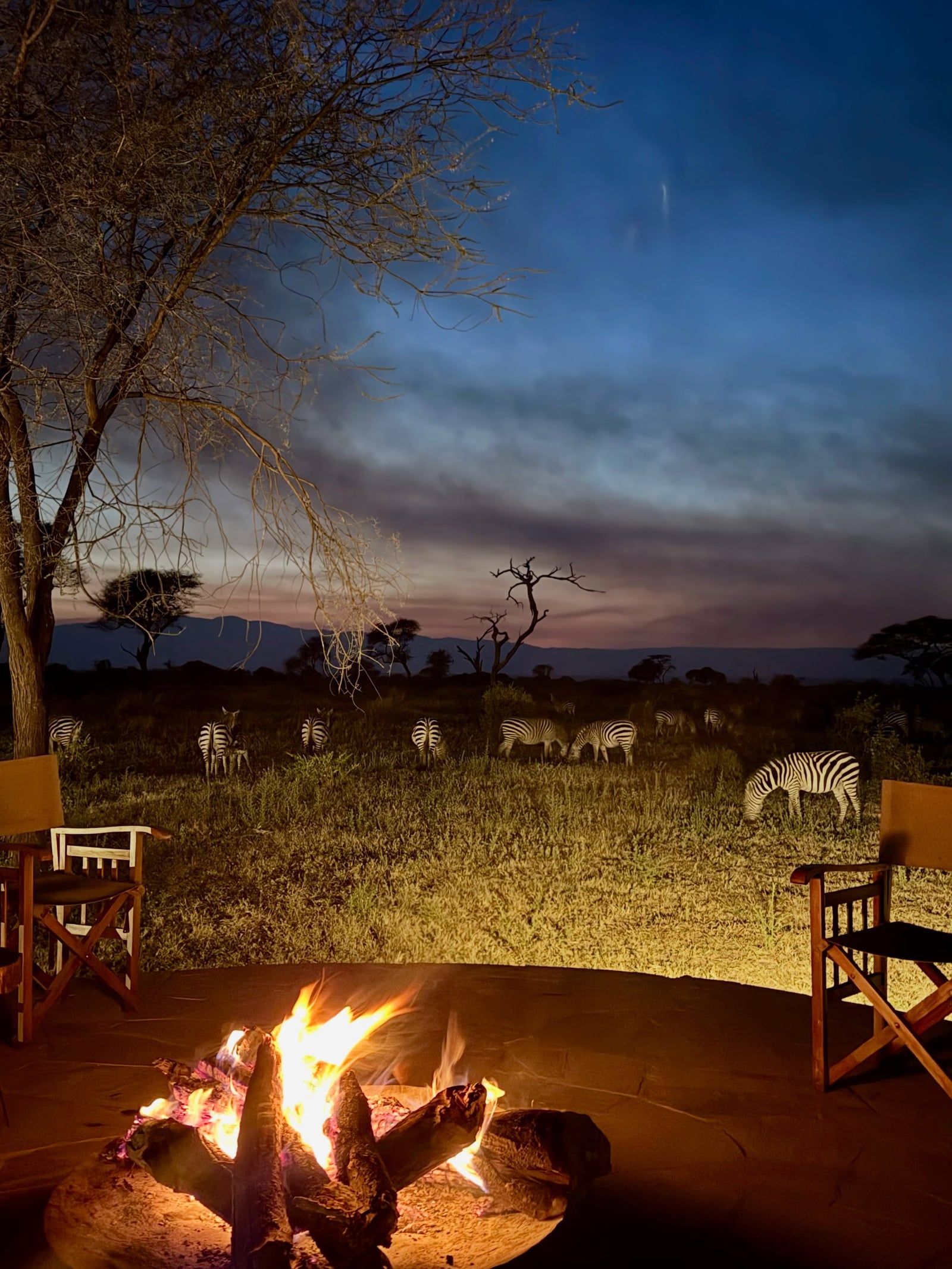
Tarangire is one of the few Tanzanian parks that runs night drives — US$50 per adult, booked in advance with park HQ. With a ranger and a spotlight you'll catch genets, bushbabies, leopards on the move and occasionally lions hunting. Departures start around 8 pm, after the gates shut to everyone else.
One to four hours on foot with an armed ranger costs US$20, or US$25 for longer walks. You'll read tracks, inspect abandoned termite mounds where dwarf mongooses live, and stand under a baobab to grasp how big it actually is. Children must be 12 or older.
Yellow-collared lovebirds — near-endemic to this corner of Tanzania — flock through the acacia woodland alongside ashy starlings, rufous-tailed weavers, secretary birds and crowned cranes. November to May adds migrants on top. Ask your operator for a guide who knows the calls.
Private day trips dominate Tarangire bookings, and nearly everything about them — pickup point, stops, hours in the park — bends to your group. Sort out a few things before you pay.
The standard product is a private full-day game drive from Arusha, 8 hours door to door with 6–9 hours inside the park, from roughly US$260–420 per group. Moshi departures run longer (about 12 hours) because the drive alone takes four hours each way. Two-day, one-night trips — either camping inside Tarangire or adding Ngorongoro Crater — start at US$600.
July–October is peak season, when elephant herds concentrate at the river and operators fill up — reserve a month or more ahead. Night drives, walking safaris, balloon flights and special campsites all require prior booking through park HQ ([email protected] or +255 739 222 685), so tell your tour company early if you want them.
Most private tours listed include 'all fees and taxes', which covers the US$50+VAT (about US$59) per-adult daily conservation fee — confirm this in writing before booking. If you book a tour without it, you'll pay at the gate by card only; cash is not accepted, and a passport is mandatory. Low season (15 March–15 May) drops to US$45+VAT.
A foreign-registered safari vehicle adds US$40/day (up to 2,000 kg) or US$150/day (2,001–3,000 kg), plus 50% for open-sided vehicles. Good operators roll this into the package price. Ask for the breakdown in writing — this is where cheap quotes hide extras.
Tarangire sits on the northern circuit: Lake Manyara is 70 km away via Makuyuni, Ngorongoro's crater rim about 150 km. A 2-day private tour covering both Tarangire and Ngorongoro, with Olduvai Gorge and a Maasai village stop, runs around US$650. Longer circuits add the Serengeti, 225 km and roughly 6 hours on.
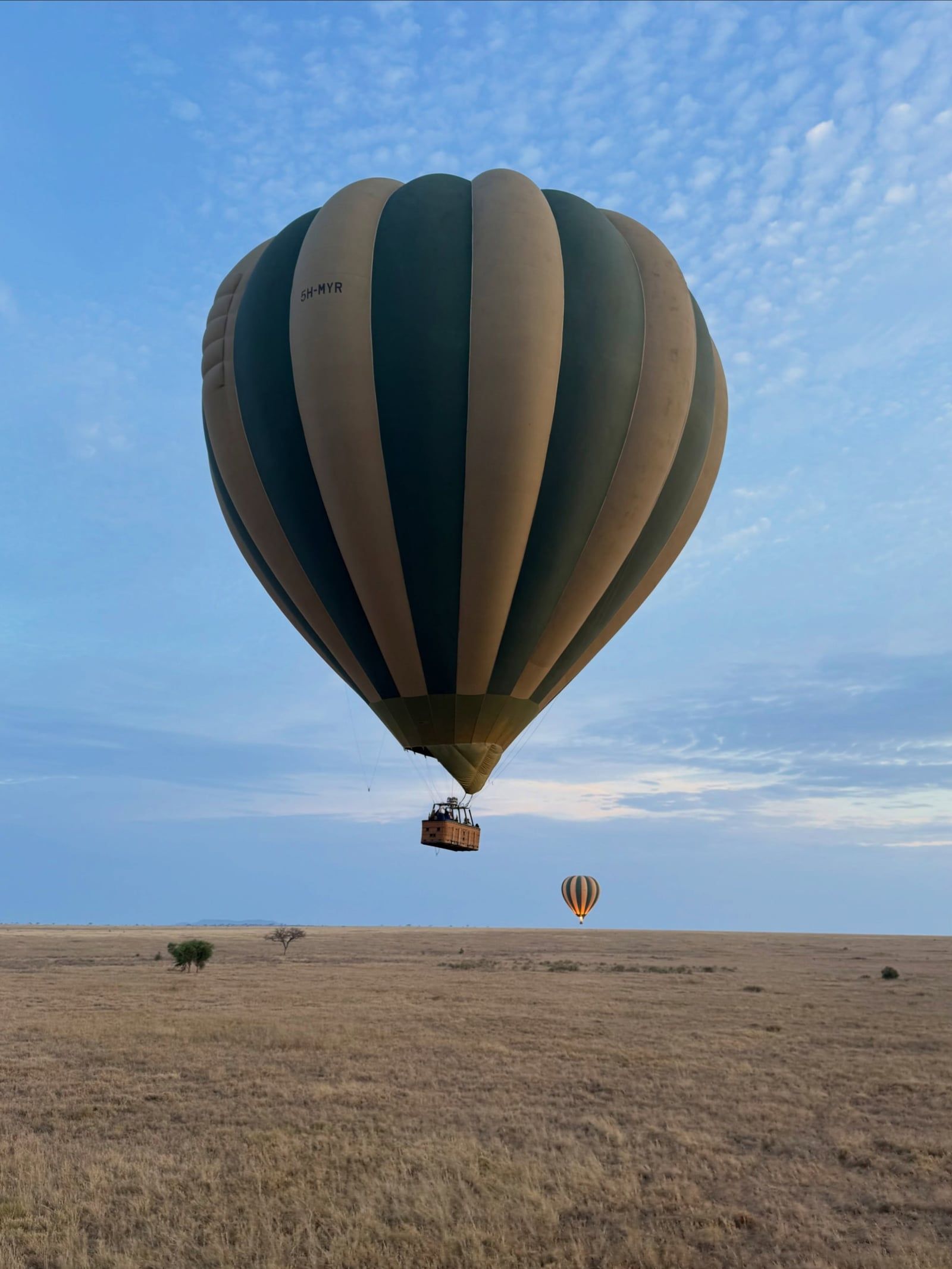
Beyond game drives: night drives at US$50 per adult, walking safaris at US$20–25, and sunrise balloon flights (TANAPA charges a US$40 balloon operation fee, built into operator pricing). None of these are standard inclusions — they're booked separately, and they're what most day-trippers skip and later regret.
Game viewing is almost entirely vehicle-based, so wheelchair users can see most wildlife without leaving the car if the operator handles transfers — at least one listed tour is marked wheelchair accessible. There are no adapted vehicles for hire at the gate, and lodges have few step-free rooms, so arrange this well ahead. Walking safaris and balloon flights aren't wheelchair-accessible.
Every listed private tour follows the same policy: cancel at least 24 hours before departure for a full refund. Park entry fees, though, are non-refundable once paid — one more reason to book through an operator that handles fees itself and absorbs the risk.
Swipe to see more
| Budget Full-Day Private Tour | Classic Private Day Trip (Arusha) | Moshi Day Trip | Two-Day Camping Tour | Tarangire + Ngorongoro 2-Day Tour | |
|---|---|---|---|---|---|
| Duration | 9 hours, all inside the park on game drives | 8 hours door to door; about 6 hours in the park | 12 hours door to door; roughly 4 hours' driving each way | 48 hours, 1 night camping inside the park | 48 hours across two parks |
| Best for | Value-focused travelers who still want the full route along the river and baobab plains | First-time safari-goers staying in Arusha — guides in English, French, Spanish, German or Italian | Travelers based in Moshi (e.g. around Kilimanjaro climbs) who can't easily reach Arusha | Photographers — you're already inside at sunrise, with no gate queue and no drive in from a distant lodge | Travelers with limited time who want elephants plus the crater's black rhino in one trip |
| Includes | Private vehicle and guide, lunch, all fees and taxes | Hotel pickup, private 4x4, lunch, bottled water, all fees and taxes | Private 4x4, lunch, bottled water, all fees and taxes | Private guide, lunch, dinner, breakfast, campsite | Both parks, Olduvai Gorge and Maasai village visit, meals, all fees, on-board WiFi |
| Price from | US$260 per group | US$310–417 per group | US$350–400 per group | US$600 per group | US$650 per group |
Swipe to see more
Gates are open daily from 6:00 am to 6:00 pm (a few sources, including Frommer's, say 6:30 am–6:30 pm). Vehicles may not drive inside the park after dark — the rule is enforced, and the 6:00 pm gate close is sharp.
A day-trip permit is valid for 12 daylight hours and allows multiple gate entries within that window. A sleep-over permit covers 24 hours. If you stay at a lodge outside the park, you pay entry again on each day you return.
From Arusha: 121 km, entirely on tarmac via the Great North Road through Makuyuni/Minjingu — about 2 hours. This is how nearly everyone arrives, on a tour vehicle that also covers the US$40–150 foreign-vehicle park fee and gate paperwork.
From Kilimanjaro International Airport (JRO): roughly 160 km and 3 hours via Arusha. Operators typically meet arrivals and drive straight to Tarangire or to Karatu for the night.
By air: scheduled bush planes (Coastal Aviation, Auric Air, Air Excel, Flightlink) land at Kuro Airstrip inside the park, 30–40 minutes from Arusha at roughly US$150–300 one-way. Flying is most worthwhile in the green season when roads slow down.
Budget option: shared minibuses run Arusha–Makuyuni/Babati for about TSh 2,000–8,000; alight at the Minjingu/Makuyuni junction and take a taxi or motorbike to the gate. You still need a safari vehicle inside the park, so this only solves the first leg.
On the circuit: Lake Manyara's gate is 70 km away, Ngorongoro's crater rim about 150 km (2 hours), the Serengeti 225 km (about 6 hours via Ngorongoro).
June to October is the window. That's the long dry season: wildlife — including elephant herds reported up to 300 strong — concentrates at the Tarangire River and Silale Swamp, vegetation thins, mosquitoes drop, and skies stay clear for photography.
Temperatures run from about 15°C on July dawns to 38°C at midday in January–February. Pack for both.
Game viewing is almost entirely vehicle-based, so visitors who use wheelchairs can see most wildlife without leaving the car — provided the operator is experienced in assisted transfers. There are no adapted vehicles for hire at the gate, so this must be arranged in advance. One listed private tour is explicitly wheelchair accessible.
Terrain: unpaved dirt track throughout; gates, picnic sites and most lodges have uneven ground, and step-free rooms are scarce — book accommodation early and ask directly.
Seniors: very manageable — a standard visit means sitting in a pop-up-roof vehicle with any walking optional. The challenges are the 2-hour drive from Arusha, bumpy tracks, midday heat up to 38°C and cold 15°C dawn drives in July. Tarangire is a year-round malaria zone, so consult a travel doctor about prophylaxis.
Children: under-5s enter free, ages 5–15 pay the child rate, and night drives accept 5–15-year-olds at US$25. Walking safaris require children 12+. Elephants wander through lodge grounds, so supervision is constant.
Camping: public campsites cost US$30 per adult per night; special and seasonal campsites run US$50–60 per adult per night and require prior booking with park HQ. All are unfenced — elephants move through at all hours, so never walk between tents unescorted after dark.
Lodges and tented camps: staying inside a private lodge adds a US$40-per-adult-per-night concession fee on top of entry (2023/24 tariff). There are no step-free guarantees — confirm with the property directly.
Activities on site: night game drives (US$50 adult), guided walking safaris (US$20 for 1–4 hours, US$25 beyond), and sunrise balloon flights with a US$40 TANAPA operation fee built into operator pricing. A guide or ranger costs US$20 per group per day.
Payments: strictly electronic — credit card, pre-loaded TANAPA Smart Card or the TanapaGo app. Cash is not accepted anywhere at the gate. For bookings, email [email protected] or call +255 739 222 685.
Speed and driving: the limit inside the park is 50 km/h — overspeeding draws a TSh 50,000 fine, and a vehicle causing an accident TSh 200,000. Animals have right of way. No driving off designated tracks and no driving after dark outside a booked night drive.
Prohibited: firearms, pets, drones without permits (permits take months and are rarely granted to tourists; unauthorized flying risks confiscation, fines and expulsion), feeding or approaching animals, littering, smoking or unsupervised fires, excessive noise, and removing plants or rocks.
Documents: passport or ID is mandatory at the gate. EAC nationals must show passports; expatriate residents need a residence permit Class A, B or C.
Fees: non-refundable, paid electronically only. Commercial filming costs US$250 per person per day; private video shooting adds US$100 per group per day on top of conservation fees.
Clothing: no dress code, but skip black and dark blue — tsetse flies home in on those colours. Khaki, olive and long sleeves at dawn and dusk are the practical choice.
Most private tours listed include 'all fees and taxes', which covers the US$50+VAT (about US$59) per-adult daily conservation fee in peak season. Confirm in writing before paying, because some cheaper quotes leave it out. If you pay at the gate yourself, it's card only — no cash — and you'll need your passport.
It varies more than you'd expect: a US$260 budget tour advertises all 9 hours inside the park, while a US$400 Moshi-based trip spends roughly 4 hours driving each way and gives you about 6 hours of game driving. Arusha-based tours sit in between, with the classic option covering about 6 hours in the park within an 8-hour day. Check the itinerary's in-park minutes, not the total duration.
Yes. At least two listed tours run from Moshi, with hotel pickup included free within about 10 km of the city centre (beyond that, a surcharge applies). Expect a 12-hour day door to door because the drive to the gate takes around 4 hours each way. It's a long haul, but it saves you relocating to Arusha.
For the main river circuit, yes — the day-trip permit gives you 12 daylight hours and a full-day game drive covers the highlights. Most guides still recommend 1–2 nights to reach the Silale Swamp and quieter southern ridges properly. A 2-day, 1-night camping tour (about US$600) puts you inside the park for the sunrise drive, with no gate queue.
Pickup is around dawn, usually 6:00–7:00 am, so you enter near the 6:00 am gate opening while predators are still active and the light is good. Moshi departures leave earlier to make the four-hour drive. Ask your operator for the exact pickup time when booking — and be ready; guides wait, but the good light doesn't.
Yes — a 2-day private tour covering Tarangire on day one and Ngorongoro on day two runs around US$650, with Olduvai Gorge and a Maasai village stop built into the route. Ngorongoro's rim is about 150 km and 2 hours from Tarangire. Longer circuits add the Serengeti, 225 km on, usually with an overnight at Karatu or Mto wa Mbu in between.
Both are possible but must be booked in advance through park HQ — your tour operator arranges it if you ask early enough. Night drives cost US$50 per adult (US$25 for children 5–15) and start around 8 pm; a ranger with a spotlight finds genets, bushbabies and sometimes hunting lions. Walking safaris cost US$20 for 1–4 hours with an armed ranger, and children must be 12 or older.
Yes — under-5s enter the park free and ages 5–15 pay the child rate (US$15+VAT). Most listed tours offer infant seats or lap seating, and the whole day is spent in a vehicle. Two rules matter: stay in the vehicle, and supervise constantly, because elephants wander through lodge and campsite grounds. Walking safaris require children 12+.
Tours run year-round; game drives continue in rain, though tracks get muddy between mid-March and May and a 4x4 is essential. In the green season much of the wildlife disperses to calving areas outside the park, so sightings thin out — the trade-off is migratory birds, newborn animals and entry fees dropping to US$45+VAT from 15 March to 15 May.
Every listed tour follows the same rule: cancel at least 24 hours before departure for a full refund. Inside 24 hours, you lose the payment. Park conservation fees are non-refundable once paid, so booking through an operator that bundles fees and taxes into the price is the safer route.
Browse verified tours with free cancellation and instant confirmation.
Find Tours


A private 4x4 safari vehicle picks you up at your hotel entrance in Moshi around dawn, and you drive roughly four hours to reach Tarangire National Park — the park itself then gets a full 12-hour day door to door, with the whole vehicle to your group rather than a shared one. The tour is run by Msafiri Tanzania. Your guide wears a Msafiri shirt and the vehicle is marked with the company name on the side and back, so finding your ride at the hotel entrance is straightforward. Guides work in English, German, French, or Spanish. Included: private transportation, bottled water, lunch, and all park fees and taxes. Snacks and alcoholic drinks are not — bring your own. Cancel at least 24 hours before departure for a full refund.
For a full refund, cancel at least 24 hours before the scheduled departure time.
German, English, French, Spanish


A full-day private game drive through Tarangire, roughly 8 hours from pickup to drop-off. You leave from wherever you're staying in Arusha City — the operator arranges collection from any hotel there — so there's no set meeting point and no shared group; the vehicle and the day's pace are yours. Lunch, bottled water and sodas are carried on board, and all park fees and taxes are folded into the price, so there's nothing extra to pay at the gate. Guides work in English, German, Italian, French or Spanish — worth stating your preference when you book, since not every language is available every day. Cancel at least 24 hours before departure for a full refund. Anything less and you won't get your money back, so decide the night before.
For a full refund, cancel at least 24 hours before the scheduled departure time.
German, English, Italian, French, Spanish


This is a private tour: you leave Moshi early in the morning after breakfast and drive straight to Tarangire, where you get about 6 hours (360 minutes) in the park with a game drive through baobab woodland and the area around the Tarangire River, where the elephant herds gather. The vehicle and English-speaking guide are yours alone — no sharing with other travelers. Included are private transportation, bottled water, lunch, and all park fees and taxes. Not covered: anything listed only as "other" by the operator, so confirm extras like drinks beyond water or tips before you go. Pickup is free from any hotel or address within 10 km of Moshi city center; outside that radius there's an additional charge, negotiated directly with the operator. Cancel at least 24 hours before departure for a full refund. Note the day is long — the drive from Moshi to Tarangire and back eats several hours on top of your 6 in the park.
For a full refund, cancel at least 24 hours before the scheduled departure time.
English


A private 4x4 day trip from Arusha: pickup at your hotel, a 2-3 hour drive to the gate, then a full eight hours inside the park before the return run. Your vehicle is yours alone — no other travelers sharing the roof hatch. The guide drives and spots in English, French, or Spanish. On-board WiFi, bottled water, lunch, and all park fees and taxes are covered, so there's nothing to pay on the day. Pickup staff wear a Meru Slopes shirt with a chest logo and carry a sign with your name printed on it. Cancel at least 24 hours before departure for a full refund.
For a full refund, cancel at least 24 hours before the scheduled departure time.
English, French, Spanish


A private vehicle and driver-guide, booked for your group alone, with pickup from wherever you're staying — the operator collects all clients, so no fixed meeting point. The day runs from morning through an afternoon game drive, returning to Arusha by evening. Guides speak English. The afternoon drive focuses on the park's animal and birdlife, including the elephant herds the area is known for, plus big cats, giraffe, baboons, and hippo in the grassland, swamp, and floodplain areas. Tree-climbing lions and rock pythons are local specialties the guide will look for. Included: private transportation, lunch, bottled water, and all park fees and taxes. Cancel at least 24 hours before departure for a full refund.
For a full refund, cancel at least 24 hours before the scheduled departure time.
English


This is a private, full-day Tarangire safari — no shared vehicle, just your group. Pickup is around Arusha town, and the day is spent entirely inside the park, with roughly nine hours (540 minutes) of game driving. Your guide speaks English. The nine hours give you time to work the river circuits slowly and loop back through the baobab country in the afternoon, when elephant traffic toward the water picks up. Lunch is provided, along with bottled water and soft drinks; parking fees are covered too. Anything else you want to buy inside the park is on you — the listed exclusions aren't itemized, so ask the operator before booking what's actually extra. One logistics note: the meeting point is Arusha town itself, so if you're staying outside town (Moshi, for example) you'll need to arrange your own way in. Cancellation is standard — full refund if you cancel at least 24 hours before departure.
For a full refund, cancel at least 24 hours before the scheduled departure time.
English


Two days, one night, run as a private trip with an English-speaking guide. You camp inside the park rather than outside its gates, which is what makes the early-morning game drive work: you're already there when the sun comes up, so no gate queue and no drive in from a distant lodge. Sunrise is when the animals are most active before the heat settles in. All three meals are cooked fresh while you're out — lunch, dinner, and breakfast the next morning. There's no list of exclusions, and the only stated extra is none: meals from arrival to departure are covered. Pickup is from hotels in Moshi, a long way from the park, so expect an early start both days. Cancel at least 24 hours before departure for a full refund.
For a full refund, cancel at least 24 hours before the scheduled departure time.
English


This 48-hour private tour covers two parks: Tarangire on the first day, Ngorongoro Crater on the second, with an Olduvai Gorge visit and a Maasai village stop built into the route. It runs as a private vehicle for your group only. Pickup is from any hotel within Arusha City — the operator is flexible on location. Guides are available in English, German, Italian, French, and Spanish. The vehicle has on-board WiFi. Included are lunch, two dinners, and all park fees and taxes. The listing flags unspecified extras as not included, so confirm drinks, tips, and anything beyond the stated meals before booking. Cancellation is free up to 24 hours before departure.
For a full refund, cancel at least 24 hours before the scheduled departure time.
German, English, Italian, French, Spanish


This is a private trip: your own vehicle and guide, picked up at your Arusha hotel, then a 2-hour drive to Tarangire National Park. The pickup point is Fire Road, Clocktower Roundabout, Plot 2, Arusha 23100. Once inside, the whole visit is game driving — 360 minutes of it — before the return run to Arusha. All park fees and taxes are covered, and the guide comes with you. Guides work in English, German, Italian, French, or Spanish — worth requesting your language when you book. Breakfast and dinner aren't included, so eat before pickup and plan for a late lunch or something on the road back. Cancel at least 24 hours before departure for a full refund. Later than that and you won't get your money back.
For a full refund, cancel at least 24 hours before the scheduled departure time.
German, English, Italian, French, Spanish


A private vehicle and guide for nine hours, all of it spent inside the park on game drives. The full 540 minutes go to tracking elephant herds and stopping at the baobab trees for photos — there's no split between drive-in and drive-out time within the itinerary, so expect pickup and drop-off to sit at the edges of that window. Lunch and all park fees and taxes are included in the price. Anything beyond that — drinks, tips, extras — you pay for yourself, so bring cash for those. Guides run the tour in German, English, French, or Spanish; specify your language when booking. Cancel at least 24 hours before departure for a full refund.
For a full refund, cancel at least 24 hours before the scheduled departure time.
German, English, French, Spanish