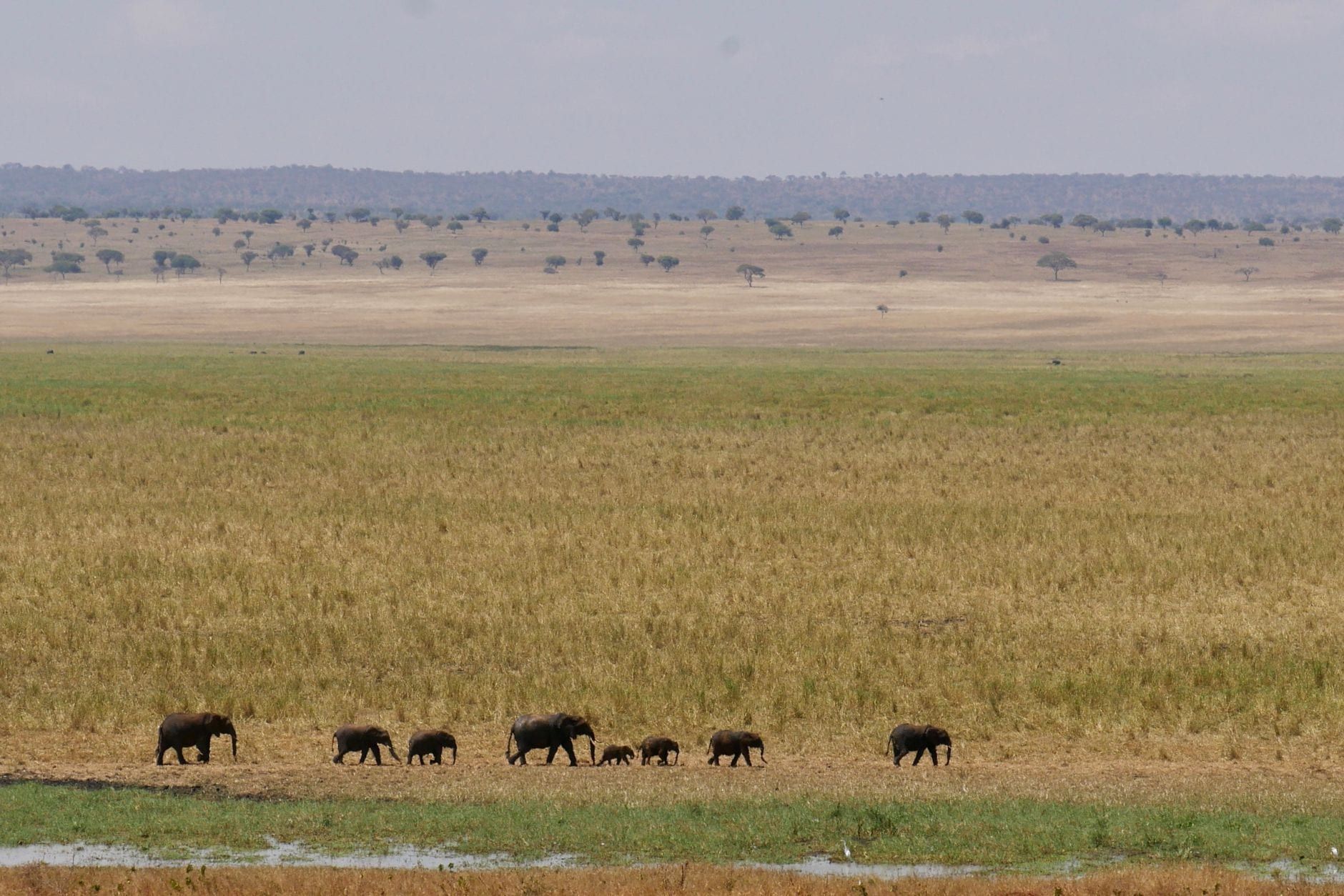
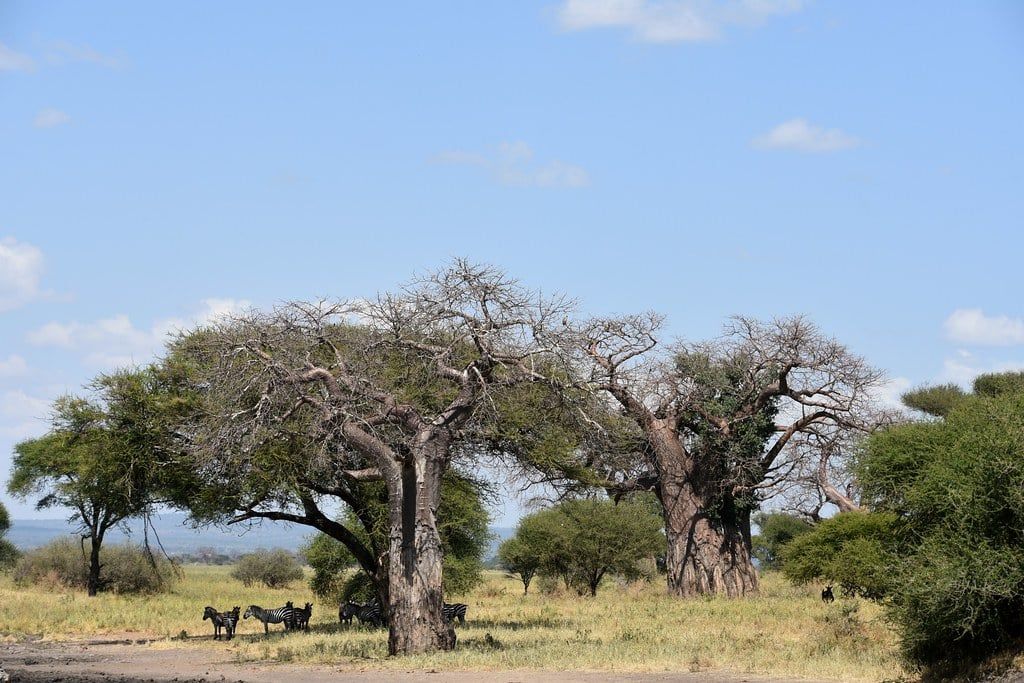
Tarangire National Park holds Tanzania's second-highest concentration of wildlife after the Serengeti: more than 95 mammal species, 550-plus bird species, and one of East Africa's largest elephant populations, all packed into 2,850 km² of baobab woodland, river valley and swamp. The park sits on the Northern Safari Circuit, about 121 km — roughly two hours on tarmac — southwest of Arusha, which makes it the easiest big-game park to reach from the city.
The trade most northern-circuit travelers are making is simple. Serengeti and Ngorongoro deliver scale and fame; Tarangire delivers animals with far fewer vehicles around them. If you know what to look for, and when, it's the park where you'll spend the longest stretches alone with the wildlife.
Tarangire Wildlife at a Glance
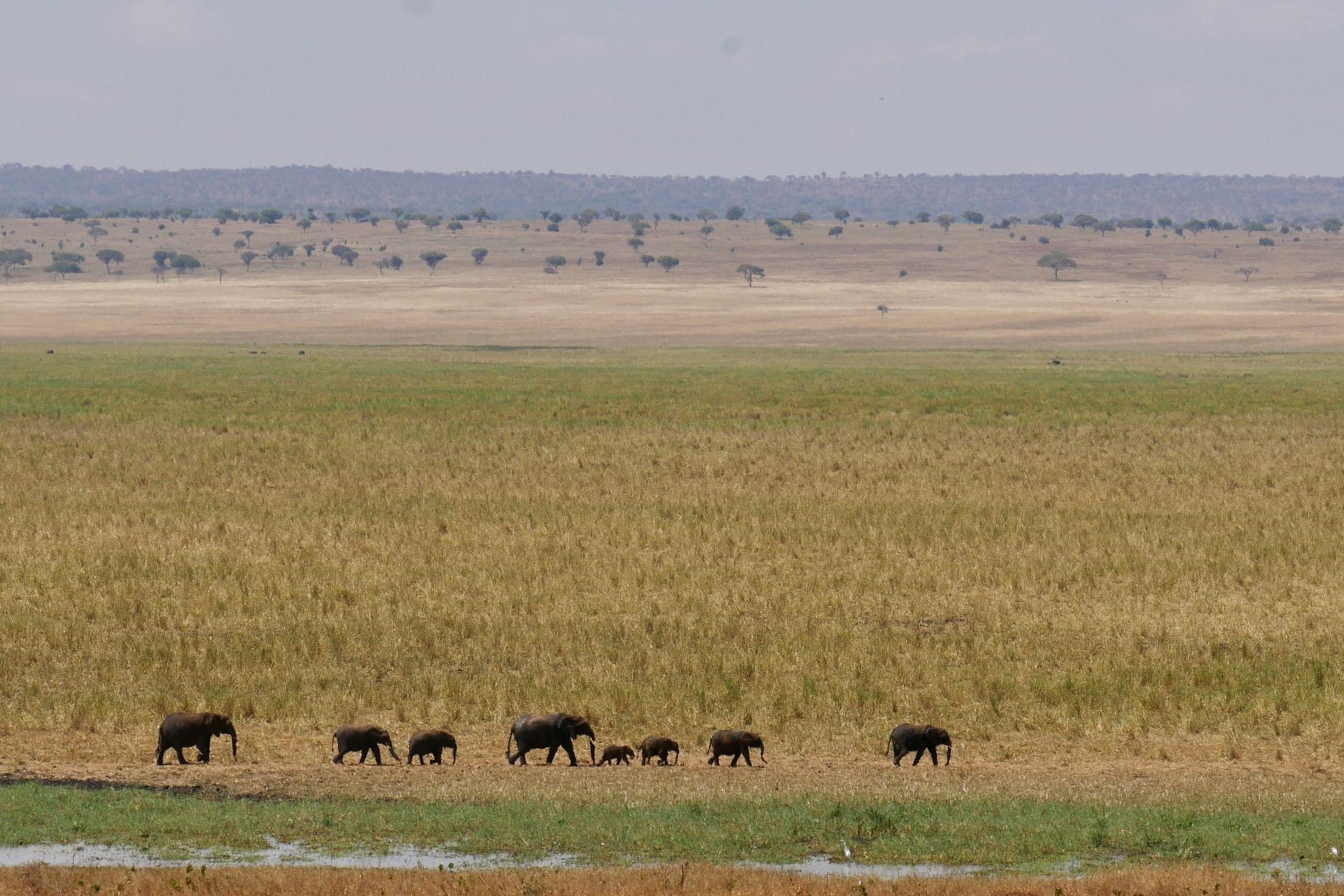
On a dry-season morning drive along the river track, I once had to stop the vehicle because a breeding herd of elephants — matriarch out front, calves tucked in the middle, maybe 120 animals — was crossing the road faster than I could count them. That's a normal hour in Tarangire between July and October. The park has the highest mammal concentration of any Tanzanian national park in the long dry season, because the Tarangire River is the only permanent water for kilometres around and everything that can walk to it, does.
TANAPA, the park authority, calls Tarangire "the elephant paradise," and the rest of the inventory backs the nickname up: buffalo, zebra and wildebeest in the thousands, giraffes in the low thousands across the wider ecosystem, resident prides of lions, and a cast of dry-country antelope — fringe-eared oryx, gerenuk, greater kudu — that most visitors to Tanzania never see at all. Tarangire safari tours usually stick to the northern sector near the main gate, which is where the day-trippers go; the deeper park is quieter still.
Here are the sighting odds for the animals people ask about most — the Big Five set — so you can set expectations before you book anything. Ratings reflect typical dry-season conditions; in the green season the migrants scatter and the ratings slide.
| Animal | Your odds of seeing it |
|---|---|
| Elephant | Abundant — near-certain, often in herds of 100+ |
| Buffalo | Abundant |
| Lion | Common — seen on most game drives |
| Leopard | Rare — resident but secretive |
| Cheetah | Rare |
| Rhino | None — absent for decades |
The rest of the headline cast, at a glance:
- Zebra and wildebeest — abundant July–October, then mostly gone.
- Giraffe and hippo — common year-round.
- Spotted hyena — common at dawn and dusk.
- Fringe-eared oryx and gerenuk — occasional, southern swamps.
- African wild dog — very rare, always a bonus.
One line of orientation before we get into the species: the park was gazetted in 1970, is Tanzania's sixth-largest, and sits close enough to Arusha (and to Lake Manyara, 70 km away) that it slots easily onto almost any northern-circuit itinerary. More park background is on our Tarangire guide page.
Elephants: Tarangire's Signature Species
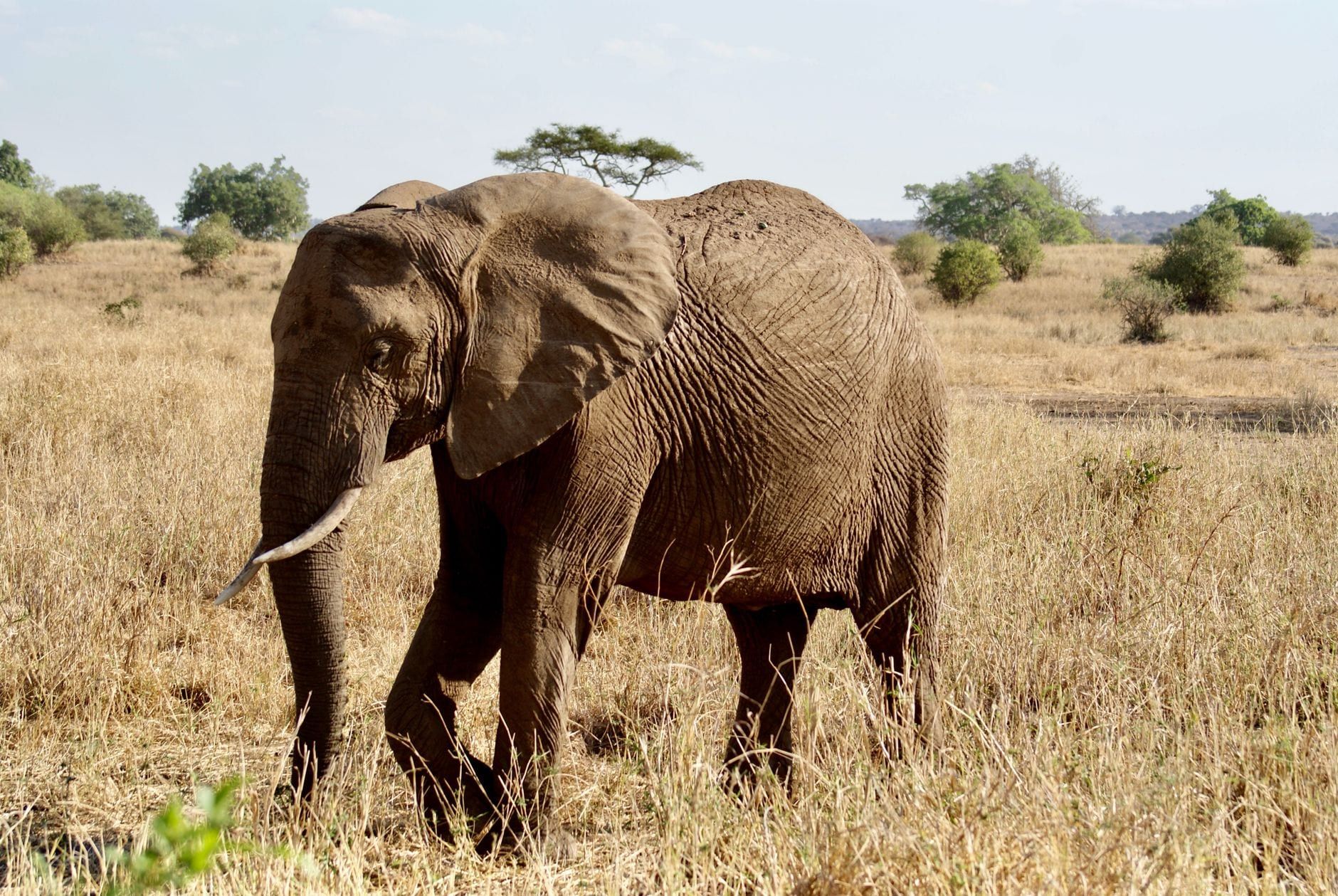
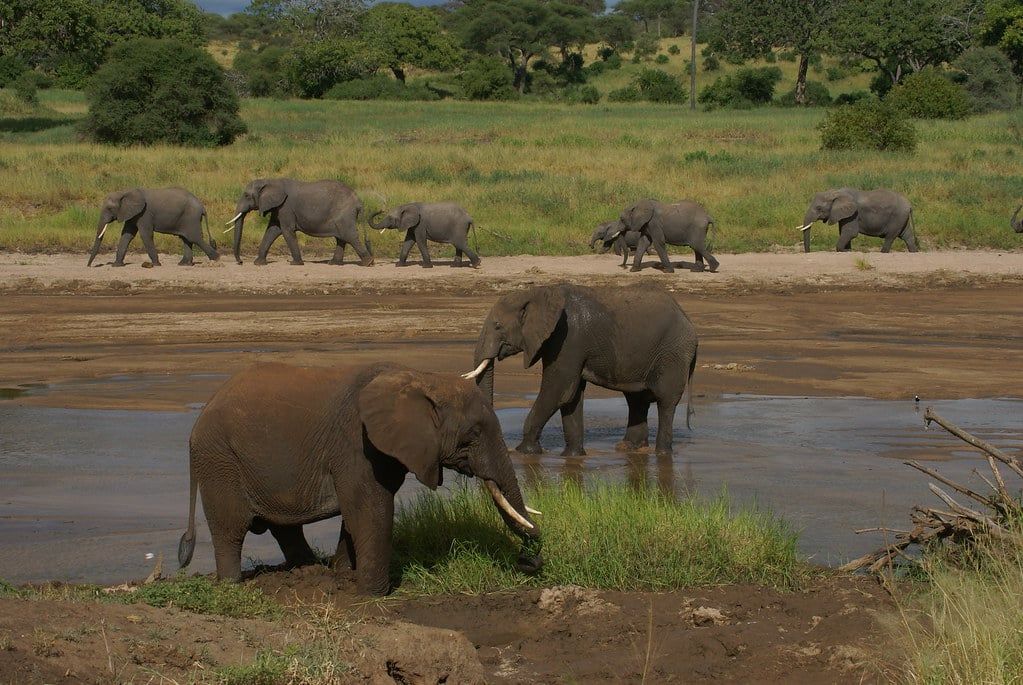
Tarangire's elephant population is one of the largest and densest in Tanzania. A 2000 aerial census counted 2,385 elephants inside the park, and a 2010 study in the journal Oryx found the population growing rapidly after recovering from historical poaching. Tour operators now put the in-park number above 3,000, with 3,000–5,000 moving through the greater Tarangire ecosystem seasonally. Take the higher figures as ecosystem-wide, not per-game-drive.
Herd sizes need the same honest treatment. Some blogs claim herds of 500; the defensible range is 200–300 animals, with individual sightings of around 100 being a realistic expectation in peak dry season. That's still a wall of grey — breeding herds with calves sandwiched between adults, plus solitary big tuskers working the riverbank. Bulls dig waterholes in the river sand with their feet and trunks, a behaviour TANAPA itself tells visitors to watch for; other animals then drink from the elephants' excavations.
The gatherings happen because the Tarangire River and the Silale Swamp hold the only reliable water from June to October. Wildebeest and zebra migrate in, but the elephants are largely resident — they stay through the green season too, so you never really visit Tarangire at a bad time for elephants. If seeing them up close is the priority, the elephant-focused safaris spend their days on the river and swamp circuits where the herds concentrate.
The conservation picture is mixed. The Tarangire Elephant Project has tagged and monitored herds since 1993, and the park made news in 2018 when its oldest known elephant to give birth to twins produced healthy calves there. But five of the migration corridors that once linked the park to surrounding dispersal areas have been lost to agriculture, which is why herds increasingly depend on the protection inside the boundary. Anti-poaching has held; habitat outside the fence line is the live issue.
Big Cats and Other Predators
Roughly 250 lions live in Tarangire, at a density near 7.5 lions per 100 km², and they turn up on most game drives. You'll see blogs claiming 700 — that number is unsourced and doesn't match the research-based density figures, so discount it. Since 2005 the park has been a designated Lion Conservation Unit, and the Tarangire Lion Project researches the ecosystem's prides.
The lions here do something unusual: some prides climb trees. This behaviour is otherwise recorded mainly in northern Tanzania and southern Uganda, and Tarangire is one of the better places to catch it — look for lions draped along acacia and sausage-tree branches in the riverine woodland, most often in the heat of the day. There's no guarantee, but your odds are better here than in almost any park south of the equator.
Leopards
Leopards are resident but genuinely difficult. Your best tactic is slow scanning of sausage trees, baobab forks and the dense riverine woodland along the Tarangire River at first and last light — a flick of tail hanging over a branch is usually the first thing you'll spot. Night drives, which Tarangire permits (unusual for the northern circuit), raise the odds considerably, since leopards do much of their moving after dark.
Cheetahs
Cheetahs are rare here, and the habitat explains why. Tarangire is densely wooded, which nullifies the open-ground speed a cheetah hunts with. You might get lucky on a grassland stretch near the river, but nobody should book Tarangire expecting cheetahs — the Serengeti's plains are where that sighting belongs.
Hyenas, wild dogs and the small predators
Spotted hyenas are common and easy to find at dawn and dusk, particularly around kills and den sites. African wild dogs are rated very rare — seen only occasionally, usually in the park's quieter corners, and always worth stopping for when a guide radios one in. Beyond the big names, Tarangire carries caracals, servals, aardwolves, honey badgers, bat-eared foxes and several jackal species, most active in the cool hours. A private safari with a good guide pays off most on this list: the small carnivores reward an operator who knows where the dens are and is willing to work for them.
Can You See the Big Five in Tarangire?
Four of the five, yes: elephant, lion, leopard and buffalo all live here. The rhinoceros is the missing one — heavy 20th-century poaching wiped both black and white rhino out of Tarangire decades ago, and none have been reintroduced.
Ranking your realistic chances: elephant and buffalo are near-certain, lion is seen on most drives, and leopard is the one you'll work for. Most travelers close the gap at Ngorongoro Crater, roughly two hours away and almost always combined with Tarangire on a northern-circuit itinerary — its small population of endangered black rhinos is best searched for at sunrise, when they feed on the open crater floor. That four-plus-one combination is exactly why Tarangire and Serengeti pairings are the standard way to build the circuit.
Plains Game and Antelope: From Zebra Herds to Dry-Country Specialists
The herbivore cast splits in two: the seasonal flood of migrants that arrives for the water, and the residents — including a trio of antelope that makes Tarangire unusual on the northern circuit.
The dry-season migrants
From July to October, roughly 10,000 wildebeest plus big herds of zebra and buffalo funnel into the park from wet-season dispersal areas outside it, gathering along the Tarangire River and around the Silale Swamp. By December most have left again. This is Tarangire's own migration — smaller than the Serengeti spectacle but far easier to watch, because the animals compress into a few kilometres of riverbank rather than vanishing across an endless plain.
The residents
Masai giraffes stay year-round; a 1991 aerial survey put about 1,377 in the park, and ecosystem-wide studies between 2011 and 2015 estimated around 2,777. Impala are everywhere, with eland, hartebeest, waterbuck, warthog and dik-dik filling out the list. The park's own name is a joke at the warthogs' expense: Tarangire is usually translated as "river of warthogs," and on the river track you'll understand why.
The dry-country specialists
Three antelope make Tarangire genuinely distinct. The fringe-eared oryx — a subspecies found only in southern Kenya and parts of Tanzania — is regularly seen here and almost nowhere else in the country. The gerenuk, whose Somali name means "giraffe-necked," stands on its hind legs to browse branches other antelope can't reach; it's an odd, elegant sight. And the greater kudu, whose males carry spiral horns up to 1.8 m long, haunts the woodland in the south. All three favour the park's southern swamps and ridges, which is the single best argument for spending a second day in Tarangire rather than rushing north.
Hippos, Primates, Reptiles and the Smaller Creatures
Hippos number in the low hundreds, and the dry season makes them easy: as the river pools shrink, the animals pack in tighter, and you'll find them wallowing shoulder-to-shoulder with just eyes and nostrils above the water. Nile crocodiles live in the Tarangire River and its wetlands, with estimates also in the low hundreds — watch the sandbanks along the river track for them basking.
Reptile fans get a bonus in the shrinking swamps: African rock pythons are occasionally seen when drying wetlands force them to move, sometimes stretched across a track in the morning sun. Primates are harder to miss than to find — olive baboon troops patrol the game trails, and vervet monkeys work the picnic sites with professional intent. They will steal unattended food, so keep the windows up and your lunch in the vehicle.
The small-mammal list rewards patience. Banded and dwarf mongooses live in and around the abandoned termite mounds that dot the plains — the mounds also shelter pangolins, one of the park's rarest sightings. Honey badgers, bat-eared foxes and ground squirrels appear on drives through open country. For the genuinely nocturnal crowd — aardvark, aardwolf, porcupine — the night drive is the only realistic route, and it's one of Tarangire's best offerings.
Birds of Tarangire: 550+ Species
More than 550 bird species have been recorded in Tarangire, among the highest counts of any park in East Africa. Some sources go further and claim more breeding species than anywhere on Earth; that's a bold claim to treat with caution, but the raw species count alone puts the park in world-class territory.
The headline acts: the kori bustard, the world's heaviest flying bird, strutting through the grassland; the flightless Masai ostrich; flocks of yellow-collared lovebirds — a near-endemic you'll see almost nowhere else — plus ashy starlings and rufous-tailed weavers, two more species with tiny global ranges centred on this ecosystem. Hornbills, lilac-breasted rollers, Nubian woodpeckers, secretary birds, crowned cranes and a full cast of eagles and vultures fill out the days. Waterbirds concentrate at the swamps and at Lake Burunge, on the park's northern boundary.
Timing runs opposite to the mammal calendar. Birding is best from roughly November to April, when Palearctic migrants arrive and residents come into breeding plumage; from late March the swamps can become impassable, so aim for November–February if the green season is your window. Birders travelling in the quiet months get a double dividend — the migrants and the low-season rates.
Best Time and Best Places to See Tarangire's Animals
June to October is the answer for mammals. Vegetation thins, the Tarangire River becomes the region's only stable water, and wildlife concentrates along it — Tarangire has the highest mammal density of any Tanzanian park in these months. July through November is the prime migration window; August has the highest wildlife density, while June and late September–October deliver similar game with noticeably fewer vehicles. Entry fees and gate logistics are on our hours and fees page, but note the gates open at 6:00 am — go in at opening, when predators are still moving and the light is best.
The green season (November–May) is not a write-off. Resident elephants stay, buffalo and giraffe remain, birds peak, and prices and crowds drop — TANAPA even cuts entry to a lower tariff from mid-March to mid-May. The honest cost: many migrants disperse outside the park to calving areas, grass grows tall enough to hide a lion, and from late March the swamps turn to mud that stops even 4x4s. For photographers and birders it's arguably the better season; for first-time Big Game seekers it's the wrong one.
Where inside the park
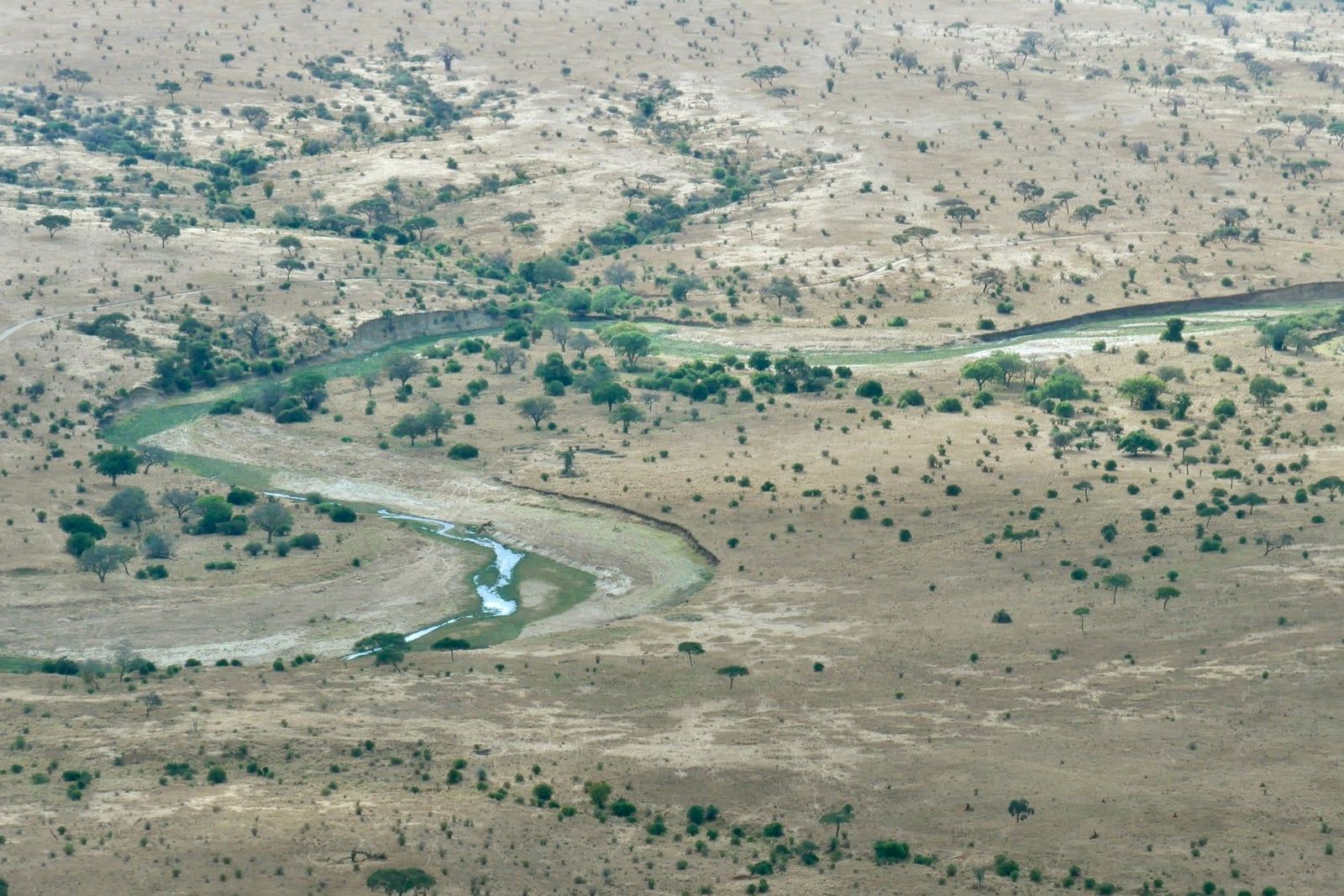
The Tarangire River track, running north through the park, is the spine of any visit — in dry season nearly everything drinks there eventually. Silale Swamp, in the park's south, is the densest big-game theatre: wallowing elephants and buffalo are a given, and the resident swamp pride of lions works the fringes. Further south still, the swamps and ridges around the park's quieter half hold the fringe-eared oryx, gerenuk and greater kudu. Most safaris never leave the northern sector near the main gate; with two or more days, heading south is the single best upgrade you can make to a Tarangire itinerary.
How to safari here
Game drives are the default, but Tarangire permits two things rare on the northern circuit: walking safaris (US$20 for 1–4 hours, US$25 beyond, with an armed ranger) and night drives (US$50 per adult), both in the northeast section and booked through park HQ. Night drives are the best route to leopards on the move, genets, civets, bushbabies and occasionally lions hunting. Balloon safaris run at dawn over the river and grassland. Our broader Tarangire safari guide covers itineraries and costs, and the full activities rundown lists the operators.
Frequently asked questions
Can you see the Big Five in Tarangire National Park?
Yes. Elephant and buffalo are near-certain, lion is seen on most drives, and leopard is resident though the hardest of the four. Rhino is the missing member — poached out of the park decades ago. Pair Tarangire with Ngorongoro Crater, about two hours away, where black rhinos are best searched for at sunrise.
What is the main animal in Tarangire National Park?
The elephant, unmistakably. The park holds one of Tanzania's largest elephant populations — 2,385 counted in a 2000 census and growing since, with operators putting the current in-park figure above 3,000 and 3,000–5,000 across the wider ecosystem in dry season. Herds of 200–300 gather at the river, and sightings of around 100 animals in one encounter are routine.
Are there rhinos in Tarangire National Park?
No. Black and white rhinos were poached out decades ago and rated 'None' by wildlife-tracking guides. The closest reliable viewing is Ngorongoro Crater's endangered black rhinos, which most northern-circuit itineraries include anyway.
When is the best time to see animals in Tarangire?
June to October. That's the dry season, when animals gather at the Tarangire River — the region's only permanent water — and vegetation thins out. July through November is the prime migration window; August is the densest month, while June and late September–October offer similar game with fewer vehicles. From December many migrants leave the park again.
Are Tarangire's lions tree-climbing lions?
Some are. Tree-climbing prides occur in Tarangire, a behaviour otherwise recorded mainly in northern Tanzania and southern Uganda. With roughly 250 lions at about 7.5 per 100 km², sightings are likely on most drives, and midday is when to scan the branches.
What rare animals can you see in Tarangire?
Fringe-eared oryx and gerenuk — Tarangire is the only Tanzanian park where both are regularly seen, mostly in the southern swamps — plus greater kudu, and the very rare African wild dog. A rare white (leucistic) giraffe was even photographed here in 2015.
Is Tarangire good for birdwatching?
Very. More than 550 species are recorded, including the near-endemic yellow-collared lovebird, ashy starling and rufous-tailed weaver, plus the kori bustard, the world's heaviest flying bird. Go from November to April for Palearctic migrants and breeding plumage — the opposite season to the mammal peak.
Does Tarangire have the Great Migration?
No — the Great Migration is the Serengeti–Maasai Mara wildebeest circuit. Tarangire has its own, smaller dry-season migration: thousands of zebra, wildebeest and elephants move into the park toward the Tarangire River and Silale Swamp from July to October, then disperse again from December.