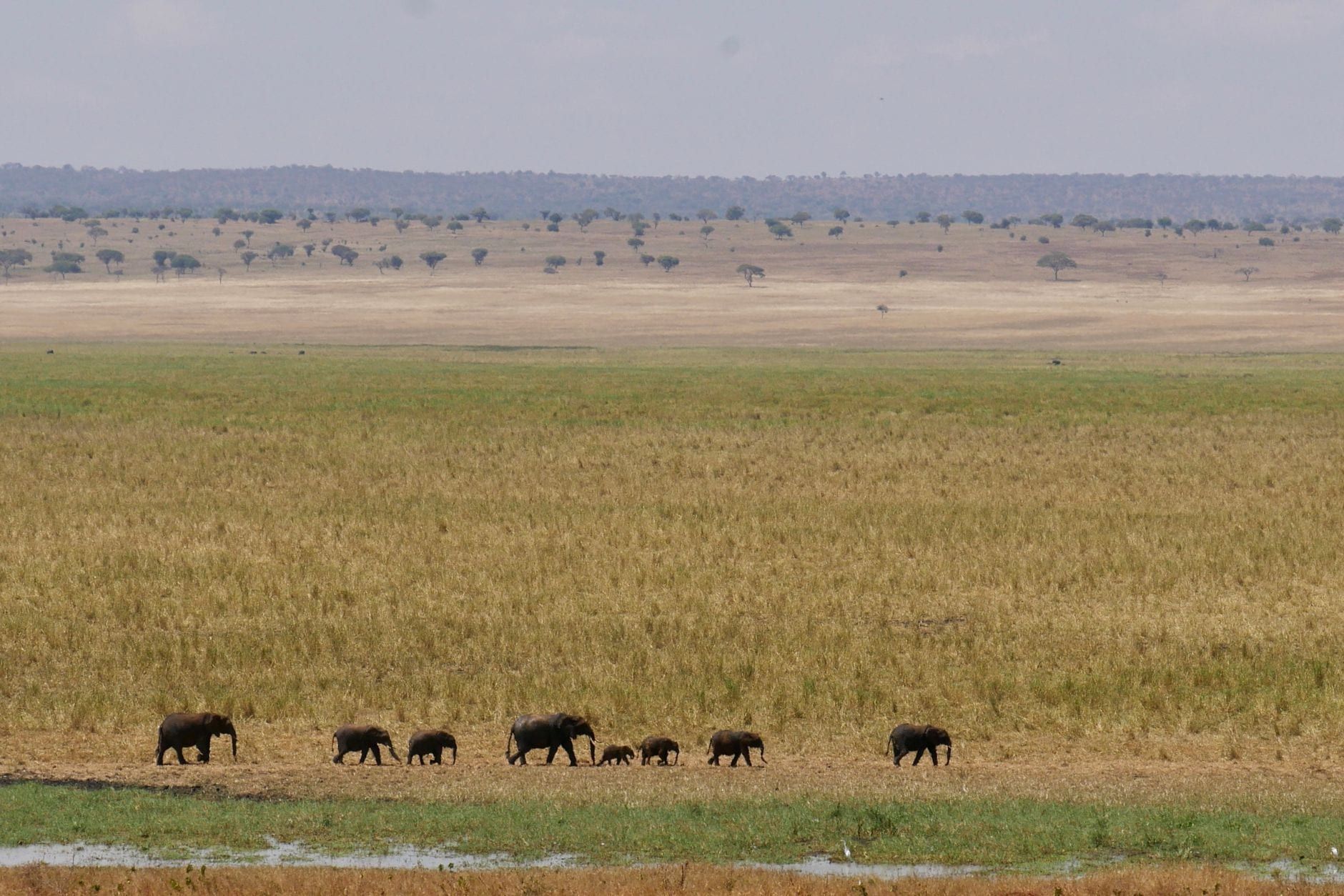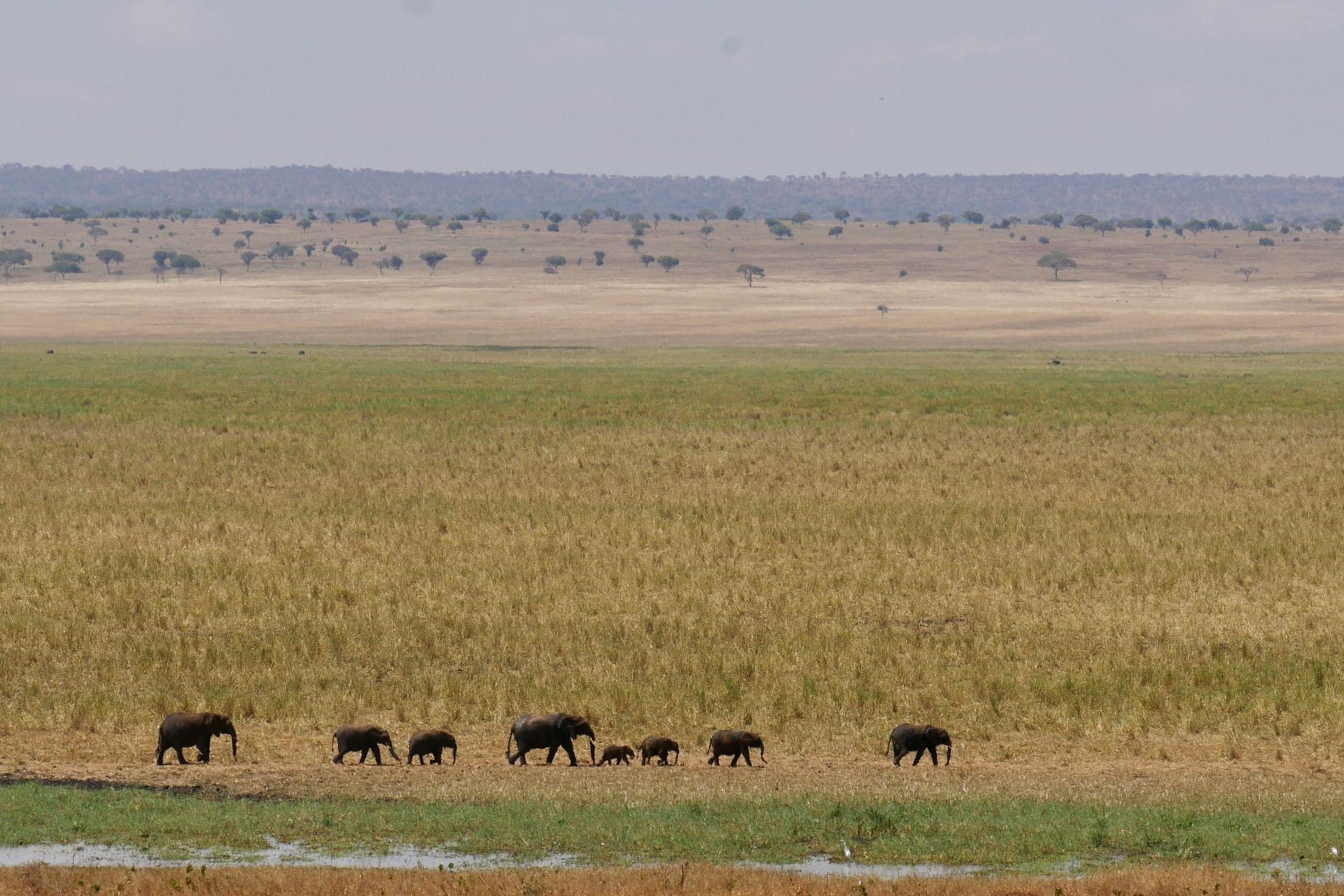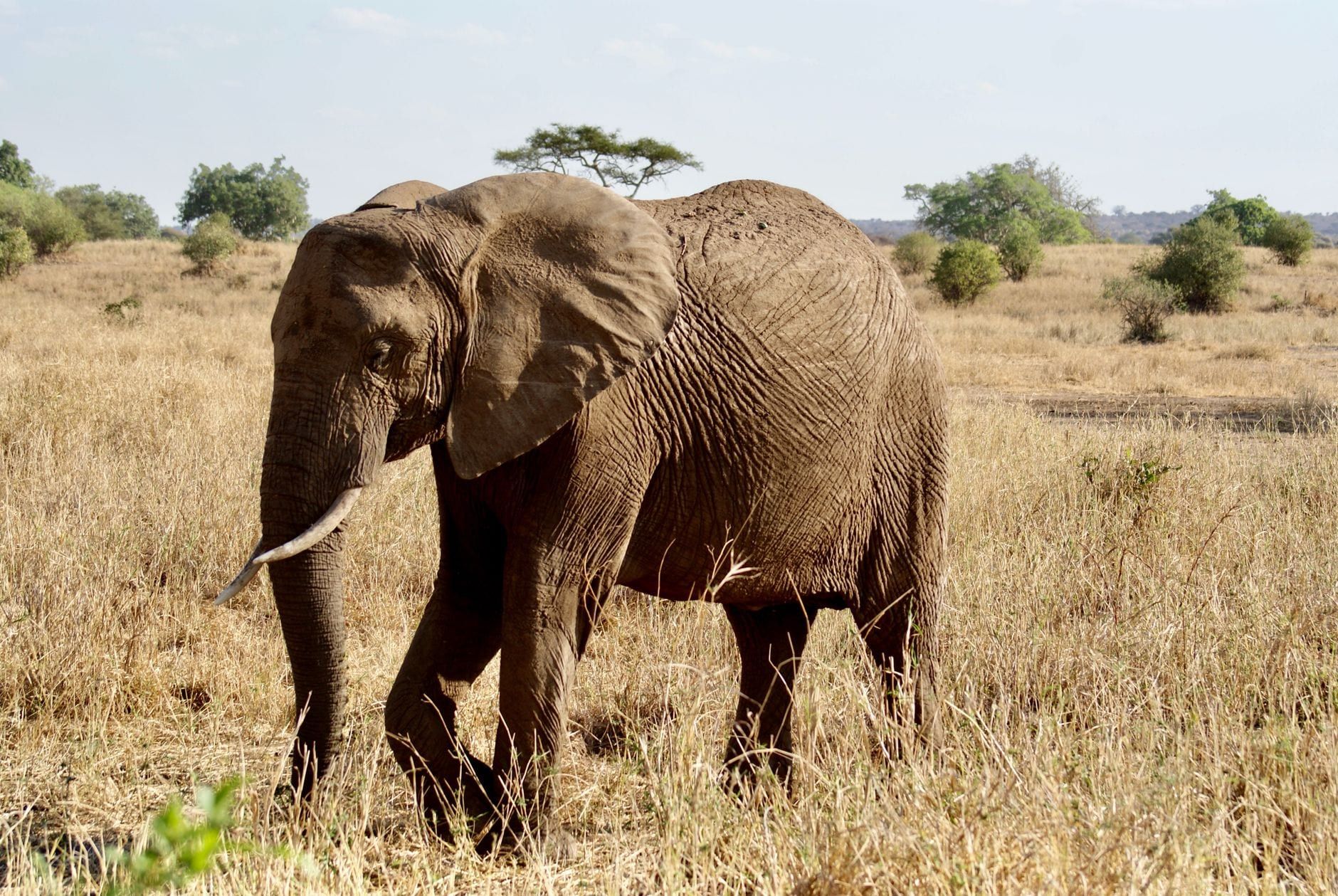
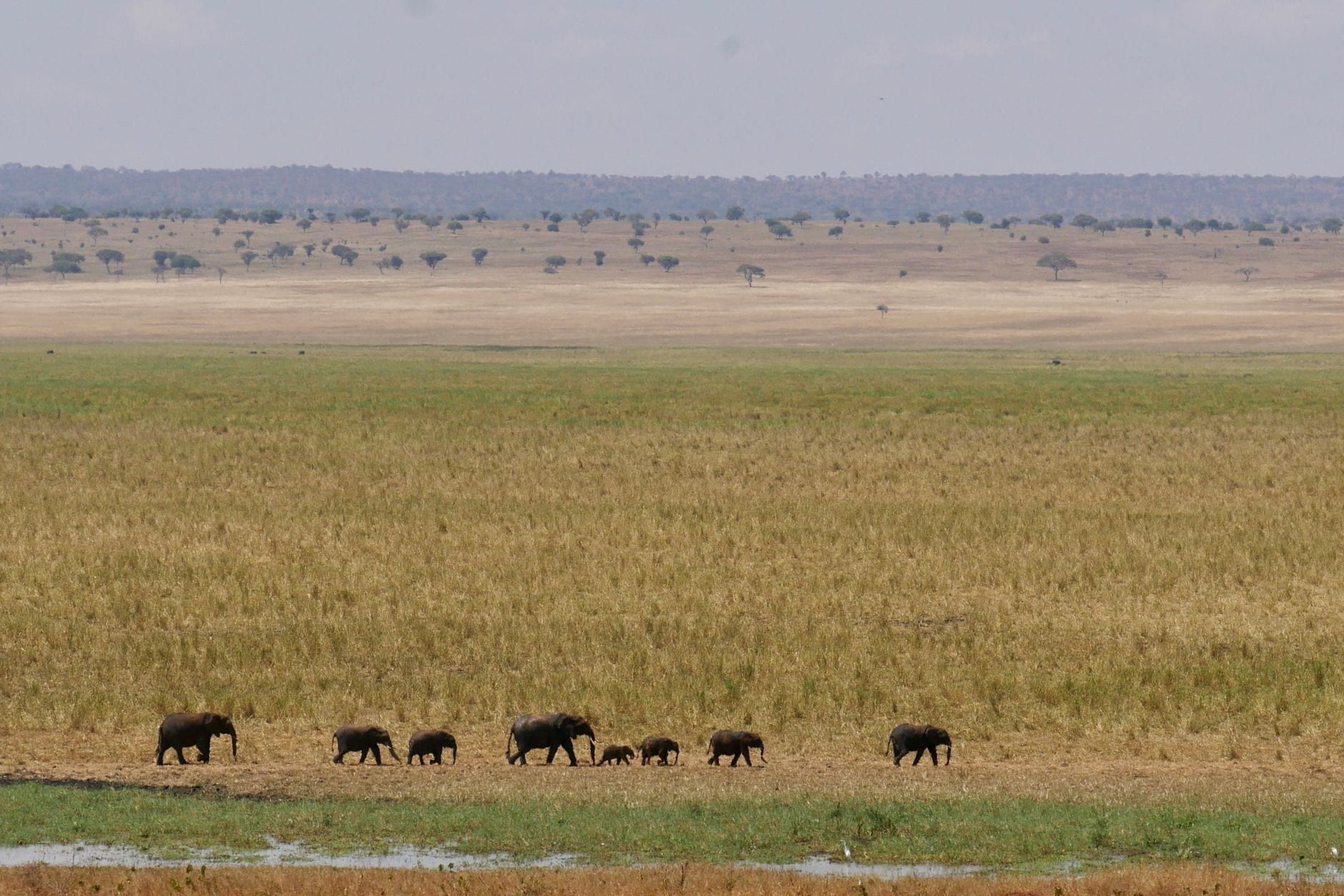
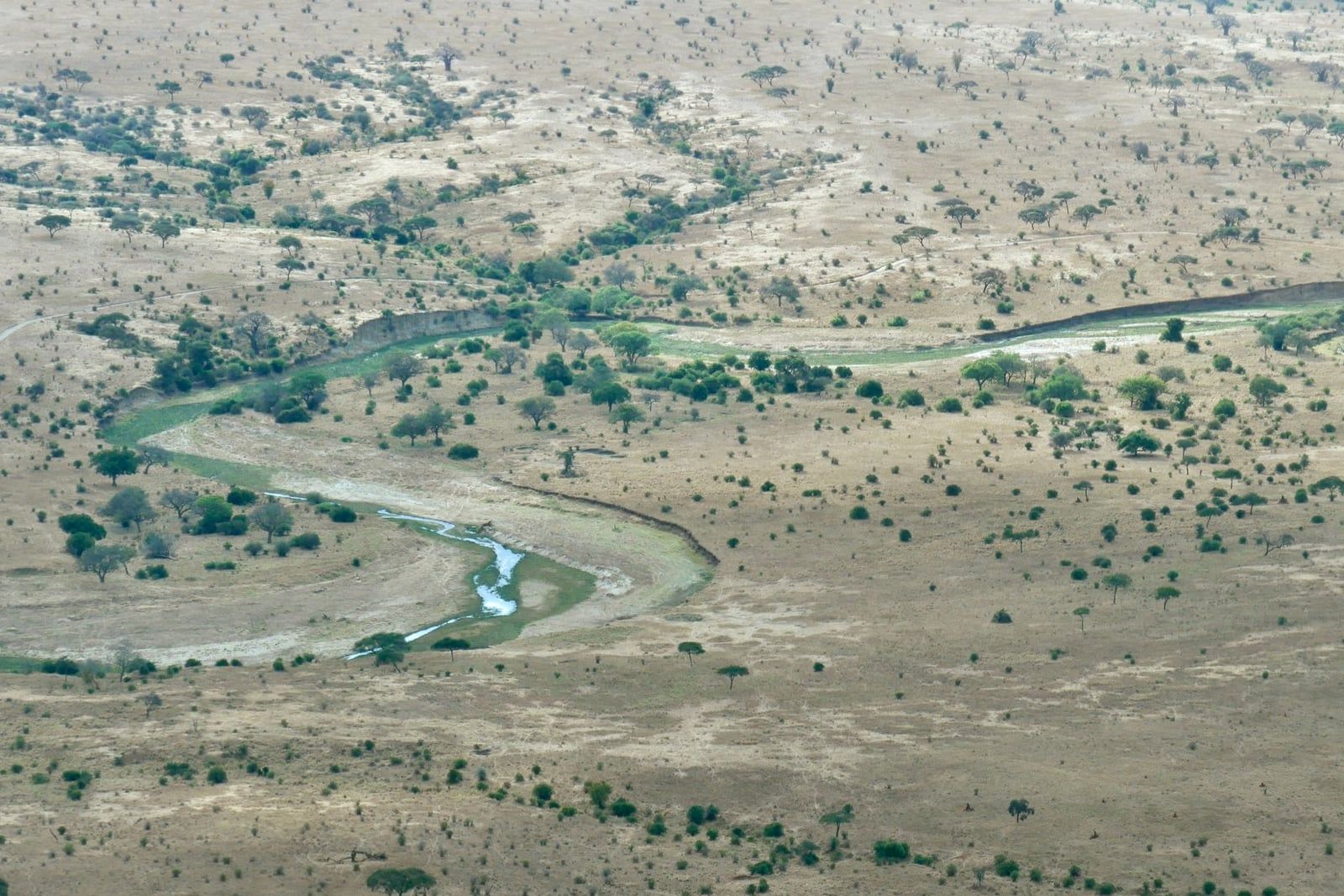
Where you sleep in Tarangire decides how much wildlife you see. From June to October the park's water shrinks to the Tarangire River and Silale Swamp, and everything with four legs walks toward them. A camp inside the park puts you among the herds at first light; a lodge an hour outside spends that same golden hour on tarmac.
The park spans 2,850 km² of acacia woodland and baobab plains — Tanzania's sixth-largest — with 550-plus bird species and one of the country's densest elephant populations. Most northern-circuit itineraries give it one or two nights between Lake Manyara, Ngorongoro and the Serengeti, which makes the bed choice unusually high-stakes. Our Tarangire safari guide covers the park itself; this one is only about where to sleep.
Tarangire Lodges at a Glance
Dry-season Tarangire funnels its famous elephant herds — breeding groups up to 300 strong — onto the riverbanks, so the shortest drive from bed to water wins. That logic drives the quick picks below. For the fuller picture of the park's history, wildlife and gate logistics, see the Tarangire overview.
| Lodge | Area | Best for | Nightly band (pp sharing) |
|---|---|---|---|
| Tarangire Safari Lodge | Inside, on a ridge above the river | Best value with a river view | $300–$500 |
| Tarangire Sopa Lodge | Inside, central | Families who want a pool | $300–$500 |
| Baobab Tented Camp | Inside, central | Cheapest bed inside the park | ~$200 |
| Maramboi Tented Lodge | Manyara–Tarangire corridor | Families, two-park itineraries | $300–$500 |
| Oliver's Camp | South, near Silale Swamp | Walking safaris, wildlife purists | $600–$1,000 |
| Lemala Mpingo Ridge / Chem Chem | Escarpment / Burunge WMA | Honeymoons, luxury | $600–$1,200+ |
Those bands are per person per night sharing, full board, and they're the honest midpoints — green-season rates drop well below them and July–October rates climb above. What they don't include is park fees, which add a real layer at every property. We break that math out further down.
Inside or Outside the Park? The Decision That Shapes Your Stay
Tarangire's lodges sit in three distinct zones, and the zone matters more than any individual property. Here's the trade-off in plain terms.
Zone 1: inside the national park. Lodges here — Sopa, Tarangire Safari Lodge, Kuro Treetops, Baobab, Ang'ata, Lemala Mpingo Ridge — pay a TANAPA concession fee per guest per night and pass it on to you. What you buy with it is position: game drives start at first light from the camp gate, before the day-trippers from Arusha and Mto wa Mbu reach the river circuit, and you finish at dusk without watching the clock.
Zone 2: boundary concessions and wildlife management areas. Community-run WMAs like Randilen (Tarangire Treetops, Nimali) and Burunge (Chem Chem) hug the park boundary. Rates are typically lower and the properties plusher, with pools and space. The real draw is activities: concession camps run their own guided walks, night drives and fly camping on WMA land, no park-HQ paperwork needed. Tarangire is one of the few TANAPA parks where these activities happen at all — inside the park they must be arranged through park headquarters — and lodge-based versions are the easiest to book. Our things-to-do guide covers the full menu.
Zone 3: the Mto wa Mbu and Manyara road. Lodges 30 to 90 minutes from the gate on the paved Great North Road are the cheapest beds in the region and work well if you're pairing Tarangire with Lake Manyara. The cost is the commute: every game-drive day starts and ends with dead driving time, and you pay park entry again each time you re-enter.
Gate times sharpen the trade-off. Gates open at 6:00 am and close at 6:00 pm, and driving inside the park after dark is banned outside a booked night drive. Outside-the-park lodges have to clear the gate by closing, which means the best light of the evening belongs to whoever sleeps inside.
The Best Lodges and Camps by Area
Forget flat top-ten lists. Tarangire's properties cluster into five zones, and the zone says more about your trip than the thread count. Here they are, west to east and north to south.
River and Central Park
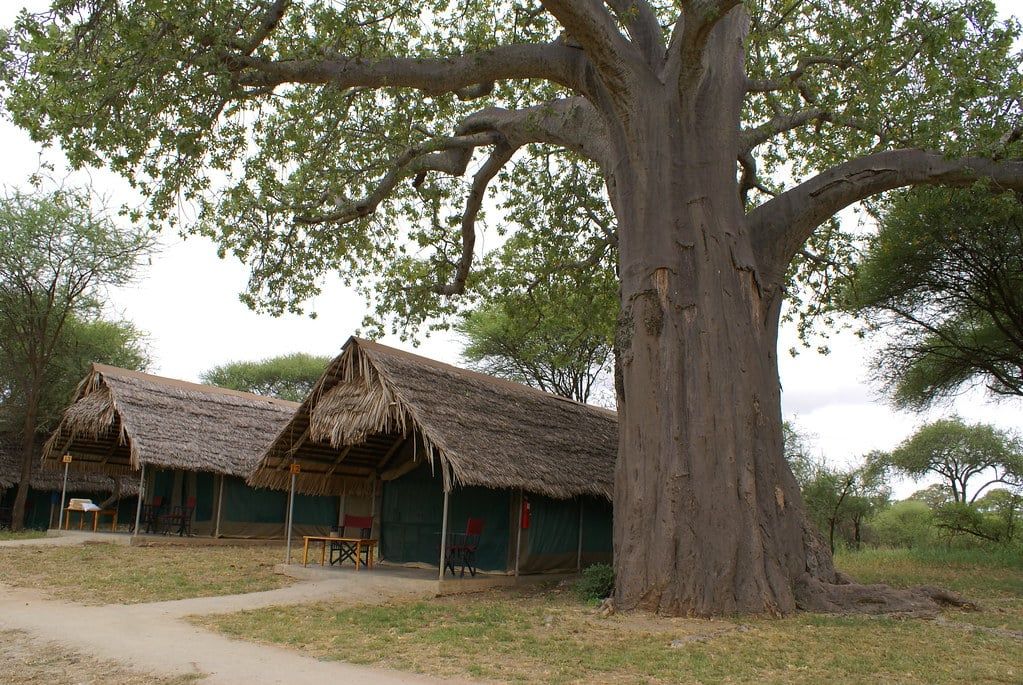
Tarangire Safari Lodge is the park's oldest lodge, opened in 1985 and run by the same owner-managers since. Its 35 thatched tents sit on raised stone decks along a ridge above the Tarangire River, minutes from the open grassland known as Little Serengeti. It's the best value with a view inside the park, in the $300–$500 band.
Tarangire Sopa Lodge is the largest property in the park: 75 brick-and-tile rooms with a big pool, 129 km from Arusha by road. Families like the space and the swimming; the trade-off is a hotel feel rather than a canvas one. A deluxe room runs around $450 a night.
Tarangire Kuro Treetops Lodge puts 25 stilted luxury tents on a baobab-studded hill above the river. Expect the $600–$1,000 band and short drives to the central river circuit.
Lemala Mpingo Ridge sits on the north-east escarpment with plunge pools and outdoor tubs on private decks. It's a 15–20 minute drive down to the river circuit — a fair price for the views. Honeymoon territory, luxury rates.
Baobab Tented Camp is the cheapest real bed inside the park, publishing $194 per person per night in low season, $218 high and $256 peak, full board. Elephants graze through the unfenced grounds at night. Book it early — at those rates it fills first.
Ang'ata Tarangire is a small semi-permanent canvas camp near Tarangire Hill with roughly equal access to the river and swamp circuits. A sensible mid-range pick if the headline names are full.
The Quiet South: Silale Swamp
Oliver's Camp, founded in 1992 by Paul Oliver, has 10 tents near Silale Swamp — the park's densest dry-season game theater, where the wildebeest and zebra migration piles in from July to October. Its concession status unlocks walking safaris, night drives and fly camping. This is the pick for wildlife purists; rates sit in the luxury band.
Little Oliver's is its smaller, more intimate sibling a short distance away, with fewer tents and a private-guided feel. Choose it over the main camp if you're a couple or small group.
Sanctuary Swala Camp has 12 tents in the south-west near the Gursi Plains and Gurusi Swamp — the sector with the lowest vehicle traffic in the park. The trade-off is distance: it's a long drive in from the main gate, so budget most of a day for arrival and departure.
North-West: Sangaiwe Gate and Lake Burunge
Lake Burunge Tented Lodge stands in a community concession managed by the local Mbugwe people, 10 minutes from Sangaiwe Gate. You trade river-side position for lakeshore sunsets and lower rates.
Tarangire Simba Lodge is built around a giant baobab, with 16 tents and an infinity pool looking over a waterhole. Sangaiwe Tented Lodge, near the same gate, rounds out the cluster. All three suit travelers looping Tarangire with Lake Manyara or the Ngorongoro highlands.
East: Randilen WMA and Boundary Hill
Elewana Tarangire Treetops builds its treehouse suites 35–50 feet up in baobab and marula canopies in the Randilen WMA. Night drives and walking safaris run on site, and published rates run $750–$1,200 per person sharing. The trade-off is 30–45 minutes' drive to the main gate on game-drive days.
Nimali Tarangire is a 9-tent camp on the eastern boundary with a spotlit waterhole in front of the lounge — evening game-watching without leaving your chair. A honeymooner favorite, with the concession perks of walks and night drives.
Between the Parks: the Manyara Corridor and Burunge WMA
Maramboi Tented Lodge has 40-plus tents in the Manyara–Tarangire corridor, and zebra and wildebeest graze between them; flamingos gather at the lake in good water years. It's the family and value pick for two-park itineraries, mid-range band.
Chem Chem Lodge is the region's ultra-luxury property: 8 suites in the Burunge WMA, a full spa, and a "slow safari" philosophy built around walks rather than vehicle mileage. It rewards stays of three nights or more and prices accordingly — $1,200-plus per person per night.
Whistling Thorn Tented Camp averages around $153 per person per night in the same corridor, making it the cheapest named option near the park. Basic, but it leaves budget for park fees and a good guide.
How Much Tarangire Lodges Cost
Every band below assumes per person per night, sharing a room or tent, on full board — three meals included. That's the standard Tarangire pricing model, and it makes comparisons straightforward once you know the convention.
- Mid-range: $300–$500 per person per night
- Luxury: $600–$1,000 per person per night
- Ultra-luxury: $1,200+ per person per night
- Published examples: Baobab $194–$256; Whistling Thorn ~$153; Sopa ~$450; Treetops $750–$1,200
Season swings the numbers hard. Rates peak in the June–October dry season and drop through the green season from November to May, when lodges discount to fill beds. Park fees don't move with the seasons, though — TANAPA charges the same whether the lodge is full or empty.
Read the inclusions carefully. Meals and morning game drives usually sit inside the rate; drinks, private vehicles, night drives and walking safaris usually don't. At concession camps, activities are often sold as packages — a two-night stay at Treetops or Nimali with walks and a night drive included can beat the à-la-carte math.
Park Fees and Other Costs to Budget For
The rate card is not the price. TANAPA's fees stack on top of every bed in and around the park, and they're almost never included in the lodge rate.
- Entry: $50 per adult peak season plus 18% VAT — about $59 at the gate; $45 plus VAT (≈$53) from 15 March to 15 May
- Children 5–15: $15 plus VAT; under-5s free; East African citizens pay TSh 10,000
- Concession fee: about $40 per adult per night at lodges inside the park
- Vehicle: $40/day up to 2,000 kg; $150/day for 2,001–3,000 kg; open-sided vehicles +50%
- Camping: $30 per adult per night at public campsites, $50–$60 at special campsites
Payment is strictly electronic — credit card, a pre-loaded TANAPA Smart Card or the TanapaGo app — and ID is mandatory at the gate. Carry no cash expecting to pay fees with it. Full current figures live on our hours and entry fees page.
One caveat worth repeating: tariffs are revised periodically, and even TANAPA's own park pages have displayed wrong figures in the past. Verify the official TANAPA tariff before you budget, and ask your operator in writing which fees are already in your package.
Budget Stays: Public Campsites and Special Campsites
Public campsites near the main gate cost $30 per person per night and give you shared long-drop or flush toilets, cold or solar-heated showers and a cooking shelter. That's the whole deal — bring everything else. Special campsites deeper in the park run $50–$60 and are genuinely remote: fully self-sufficient, booked in advance through park HQ, with wildlife passing close.
Almost nobody arranges this alone. Budget camping safaris — operator vehicle, cook, tents and camp fees bundled — are the standard route, and they beat a cheap lodge on price while losing on comfort. If the choice is a $153 lodge or a $30 campsite with a good guide, take the guide; if it's a $30 campsite with nobody but yourselves, take the lodge.
When to Go and When to Book
Dry season (June–October) is when the park performs: game crowds the river and Silale Swamp, the Tarangire migration is in full flow from July, and the best inside-the-park camps sell out. Book 9–12 months ahead, and book the position, not just the property — river-view rooms and tents go first at every lodge. Small 10–15 tent camps fill long before the 75-room Sopa does.
Green season (November–May) flips the strategy. Game disperses to wet-season calving grounds outside the park, so there's less penalty for sleeping outside — and outside-the-park lodges become the better value, with discounts on top. Birding peaks November–May with migratory species among the park's 550-plus. Two warnings: some camps close for the long rains from mid-March to May, and tracks turn to mud, so allow extra driving time or fly in.
On booking method: walking into a lodge's website and paying rack rate is the expensive way. Local operators hold contract rates across many properties and bundle park fees, vehicles and guides into one price. If you're planning the full northern circuit, comparing Tarangire tour packages usually beats booking beds direct — just confirm in writing which fees are included.
Getting to Tarangire and Your Lodge
The park is 121 km from Arusha on tarmac, about two hours to the main gate. Most international arrivals land at Kilimanjaro International (JRO), roughly 160 km and three hours away via Arusha; Arusha's own airport (ARK) serves domestic hops. The full transport picture — road, air and even public minibus — is on our getting to Tarangire page.
Flying is the shortcut: scheduled light aircraft from Arusha reach Kuro Airstrip inside the park in 30–40 minutes, from roughly $150–$300 one-way, connecting onward to Manyara, the Serengeti and Zanzibar. Budget up to an hour's transfer from the airstrip to camp. Flying earns its price in the green season, when roads slow down.
Do the transfer math before you commit to a lodge. Boundary properties like Tarangire Treetops cost 30–45 minutes to the main gate on every game-drive day; deep-south camps like Sanctuary Swala add a long haul inside the park from the gate itself. On a one-night stop, those hours come straight out of game-viewing time — pick the zone that matches your pace.
Frequently Asked Questions
Can you stay inside Tarangire National Park?
Yes — Tarangire Safari Lodge, Tarangire Sopa (75 rooms), Kuro Treetops, Baobab Tented Camp, Ang'ata and Lemala Mpingo Ridge all sit inside the park, alongside public and special campsites. The payoff is first-light game drives without a gate dash, plus a sleep-over permit that's valid 24 hours with unlimited re-entries.
How much do Tarangire lodges cost per night?
Roughly $300–$500 per person per night full board for mid-range, $600–$1,000 for luxury and $1,200+ for ultra-luxury. Published examples range from Baobab Tented Camp at $194 in low season to Tarangire Treetops at $750–$1,200. Park fees are extra on top of every rate.
Is it better to stay inside the park or outside in a concession?
Inside wins on early starts and short drives to the dry-season river concentrations. Outside — on WMAs like Randilen and Burunge — wins on price, pools, night drives and walking safaris run by the camps themselves. The 24-hour entry rule means inside guests pay entry once per day, which narrows the cost gap further.
What's the difference between a lodge and a tented camp?
Lodges are solid-walled, hotel-style buildings — Sopa's 75 brick-and-tile rooms are the example. Tented camps use heavy canvas on raised platforms, like Oliver's 10 tents or Baobab, with the same beds and en-suite bathrooms. Canvas just adds the sounds of the bush; the plumbing is identical.
When should I book Tarangire accommodation?
For June–October, book 9–12 months ahead — river-view rooms and small camps sell first. Green season (November–May) has far more availability and lower rates, so a couple of months' notice is usually enough.
Are Tarangire lodges safe with wild animals around?
Camps inside the park are unfenced, and elephants regularly graze through the grounds at night. Maasai askari guards escort guests between tents and the mess area after dark, and incidents are rare when you follow camp rules — never walk unescorted after dark, never feed or approach animals.
Can I visit Tarangire on a day trip instead of staying overnight?
It's a two-hour drive from Arusha, so a day trip works — the 12-hour day permit covers a full river circuit. But gates close at 6 pm, so you lose the dawn and dusk hours where the park is at its best. One night inside or at the boundary is what Tarangire rewards; most northern-circuit itineraries give it one or two.