Why Tarangire Deserves a Spot on Your Northern Circuit
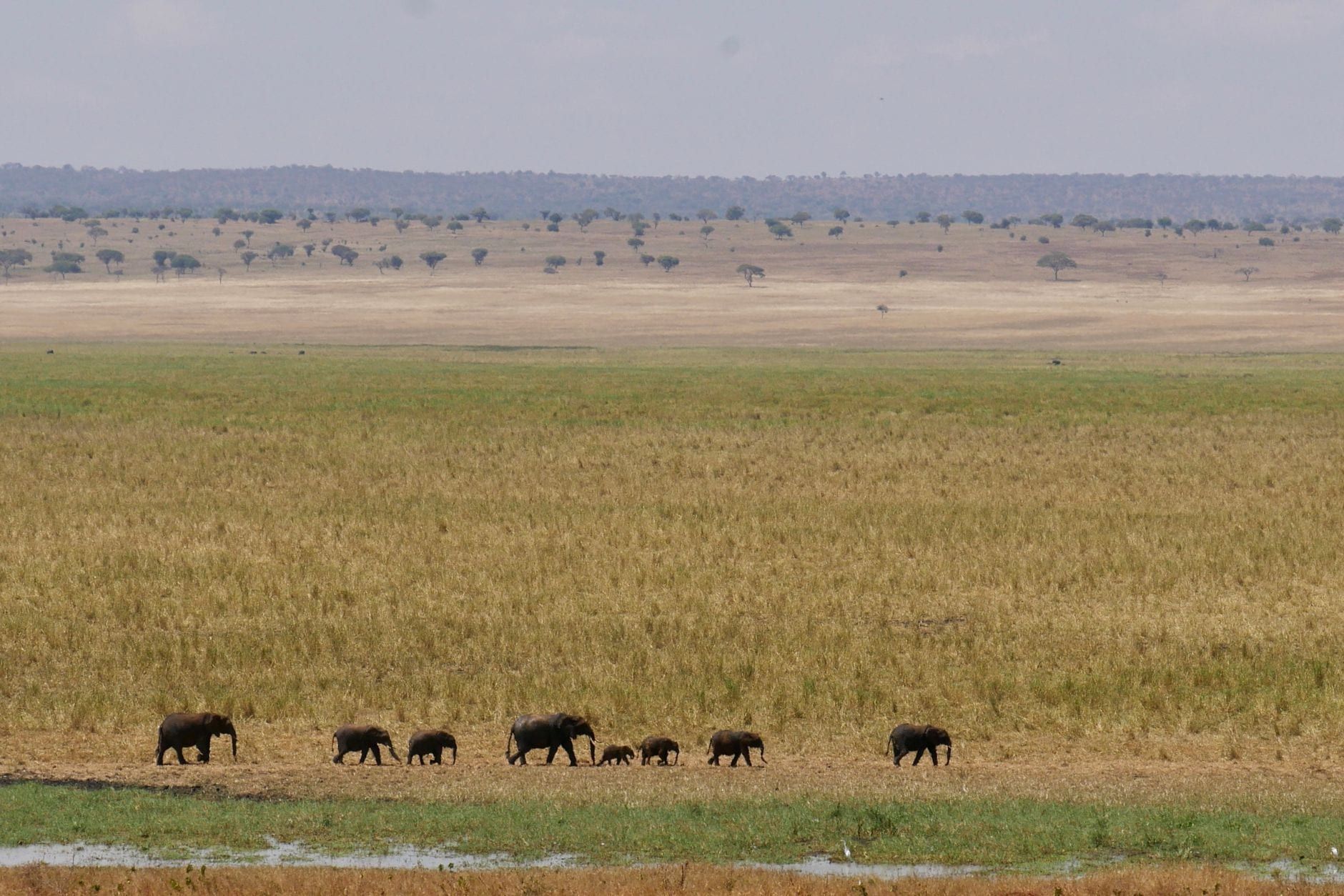
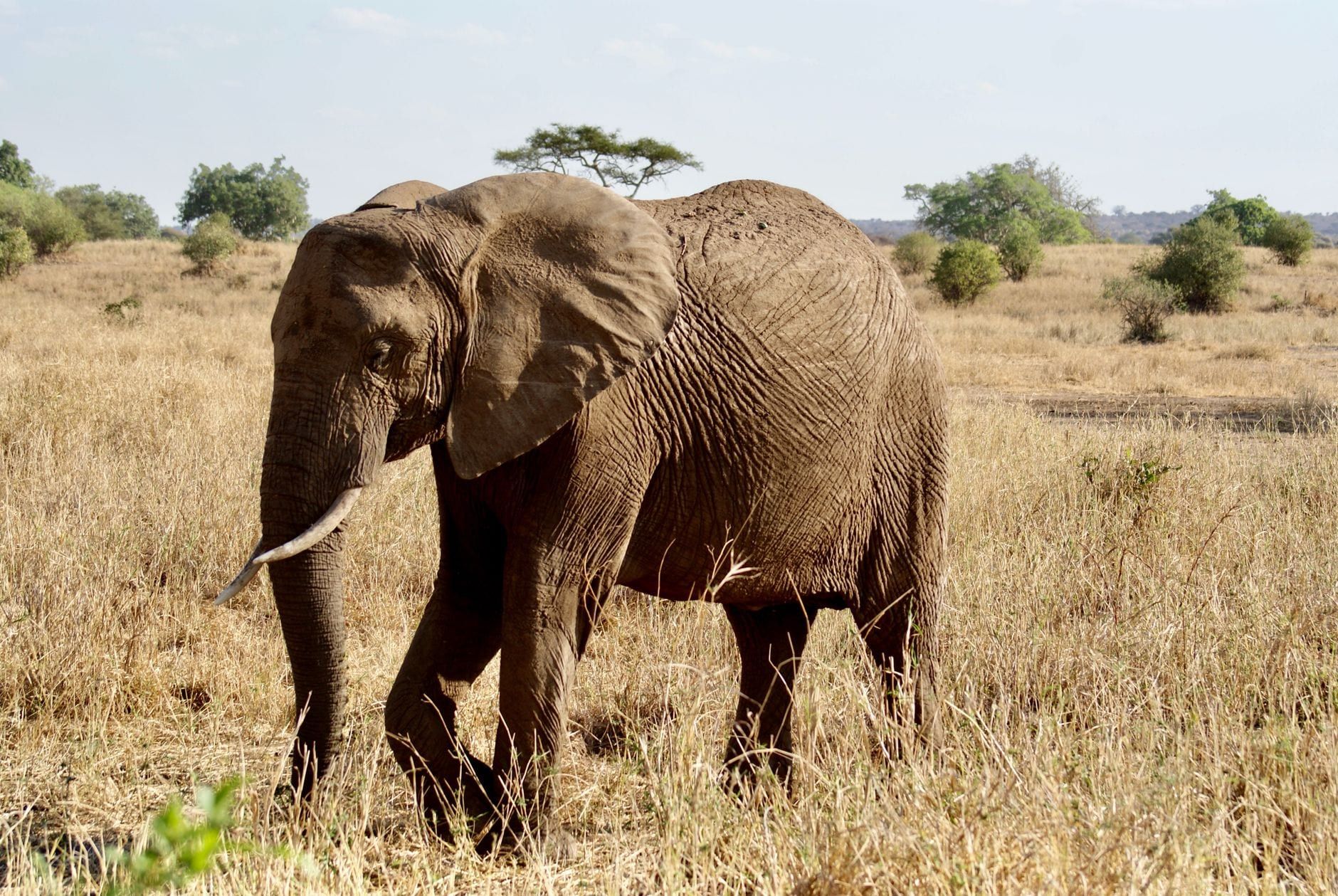
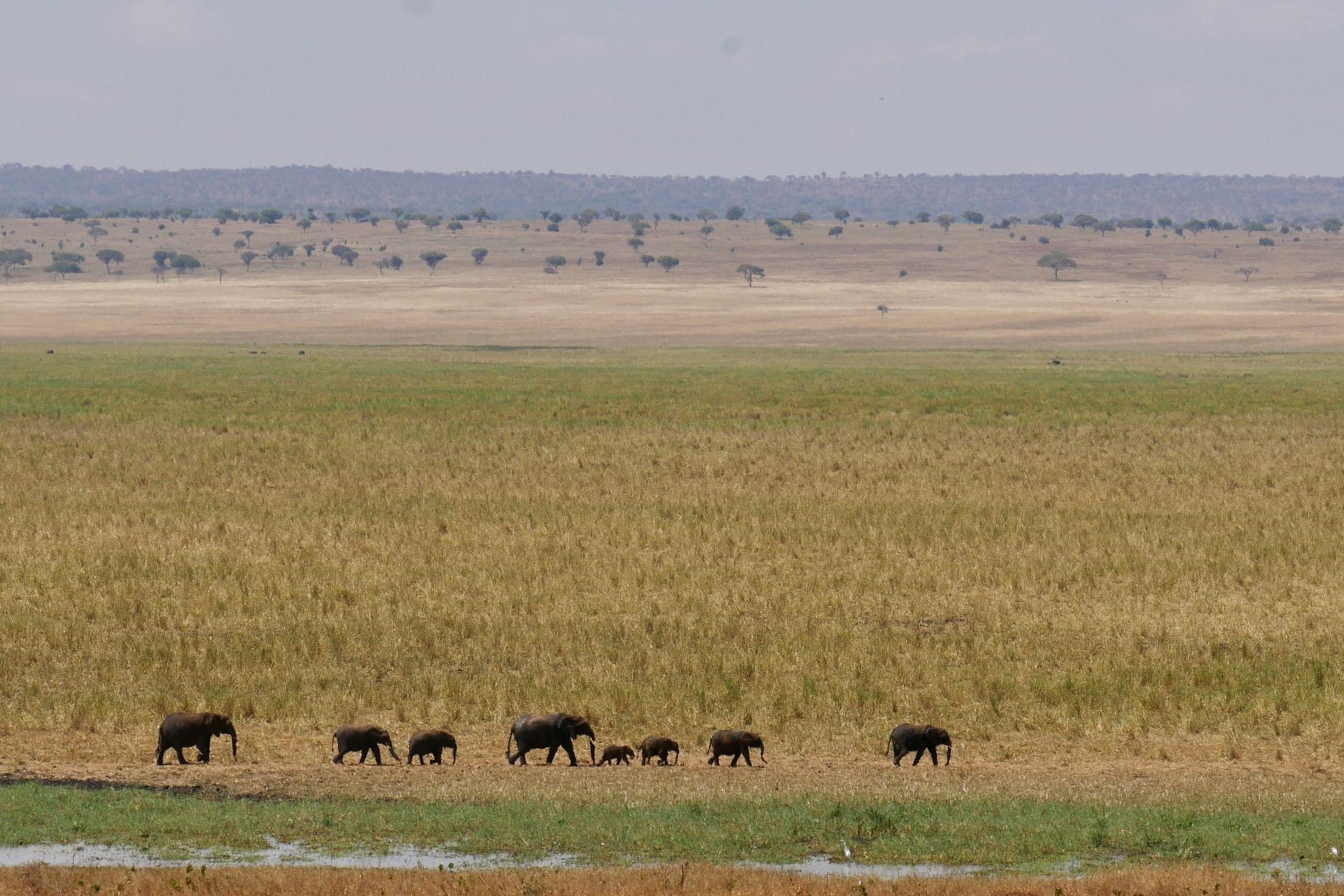
Tarangire has the best elephant viewing in northern Tanzania. From June to October the Tarangire River is the only reliable water for miles, so breeding herds — up to 300 strong — come down to its banks every day, alongside buffalo, zebra and the wildebeest that migrate in from the surrounding plains. A 2000 census counted 2,385 elephants inside the park, and the population has grown rapidly since. All of it plays out beneath baobabs that can live 3,000 years, in a 2,850 km² park that sees a fraction of the vehicle traffic of the Serengeti or Ngorongoro.
So yes, it's worth it — and it's easy to slot in. The main gate is 121 km from Arusha, about two hours on tarmac, with Lake Manyara 70 km up the road and Ngorongoro's crater rim roughly 150 km away. Entry costs US$50 plus VAT against the Serengeti's US$70 plus VAT, and most northern-circuit itineraries put Tarangire first or last, with a night at Karatu or Mto wa Mbu in between. Below is the practical layer: every activity, where in the park it happens, what it costs, and the right month for it.
The Best Things to Do in Tarangire National Park
Eight activities cover Tarangire, and most visitors will do four or five of them without extra effort. Each write-up below says what it is, what it costs, and when it works best. Two access notes up front: night drives and multi-day walking safaris need advance booking with park HQ, and the longer versions of both run mostly on the private concessions and community land bordering the park rather than inside it.
1. Game Drives Along the Tarangire River
This is the core activity and the reason most people come. Gates open at 6 am, and the first two hours are the best of the day — predators still moving, low gold light, and the full 12 daylight hours of a day-trip permit ahead of you. Head straight for the river track: in dry season it's realistic to pass several hundred elephants before lunch. Midday slackens; animals retreat to shade and so should you, until the late-afternoon drift back to water.
Mornings belong to whoever sleeps inside the park — lodges within the boundary start drives before Arusha day-trippers arrive mid-morning. Self-drive works, and a foreign-registered vehicle costs US$40 a day on top of entry, but a driver-guide who reads the radio traffic finds more game. Day safaris from Arusha run US$200–300 per person; compare safari tours from Arusha before booking anything.
2. Night Game Drives
Tarangire is one of the few Tanzanian national parks where you can legally drive after dark. Night drives cost US$50 per adult and US$25 for children aged 5–15, must be booked in advance with park HQ, and typically start around 8 pm — after the 6 pm gate closing. With a ranger and a spotlight you get a cast the daylight never shows: genets, civets, bushbabies, leopards on the move, sometimes lions hunting. Camps on the community land bordering the park, such as Burunge Wildlife Management Area, run their own night drives too; book those through the camp.
3. Walking Safaris
Short walks run inside the park itself: 1–4 hours costs US$20 per person, longer walks US$25, with an armed ranger at US$20 per group per day — all arranged through park HQ ahead of time, and children must be 12 or over. On foot you read tracks in the sand, find dwarf mongooses living in termite mounds, and finally understand how big a baobab is when you're standing under one. Multi-day walking safaris happen mostly in the private concessions and community areas outside the boundary, so pick a camp there if that's your goal.
4. Birdwatching
More than 550 species are recorded here, including dry-country specials you'll struggle to see elsewhere in Tanzania: the yellow-collared lovebird, ashy starling and rufous-tailed weaver. Secretary birds stalk the grassland; open-billed storks and crowned cranes work the swamp edges. November to May is the peak, when migrants arrive and residents come into breeding plumage, but the lovebirds stay year round. Bring binoculars even on a general safari — the flocks along the Silale Swamp fringe alone justify the weight.
5. Hot-Air Balloon Safaris
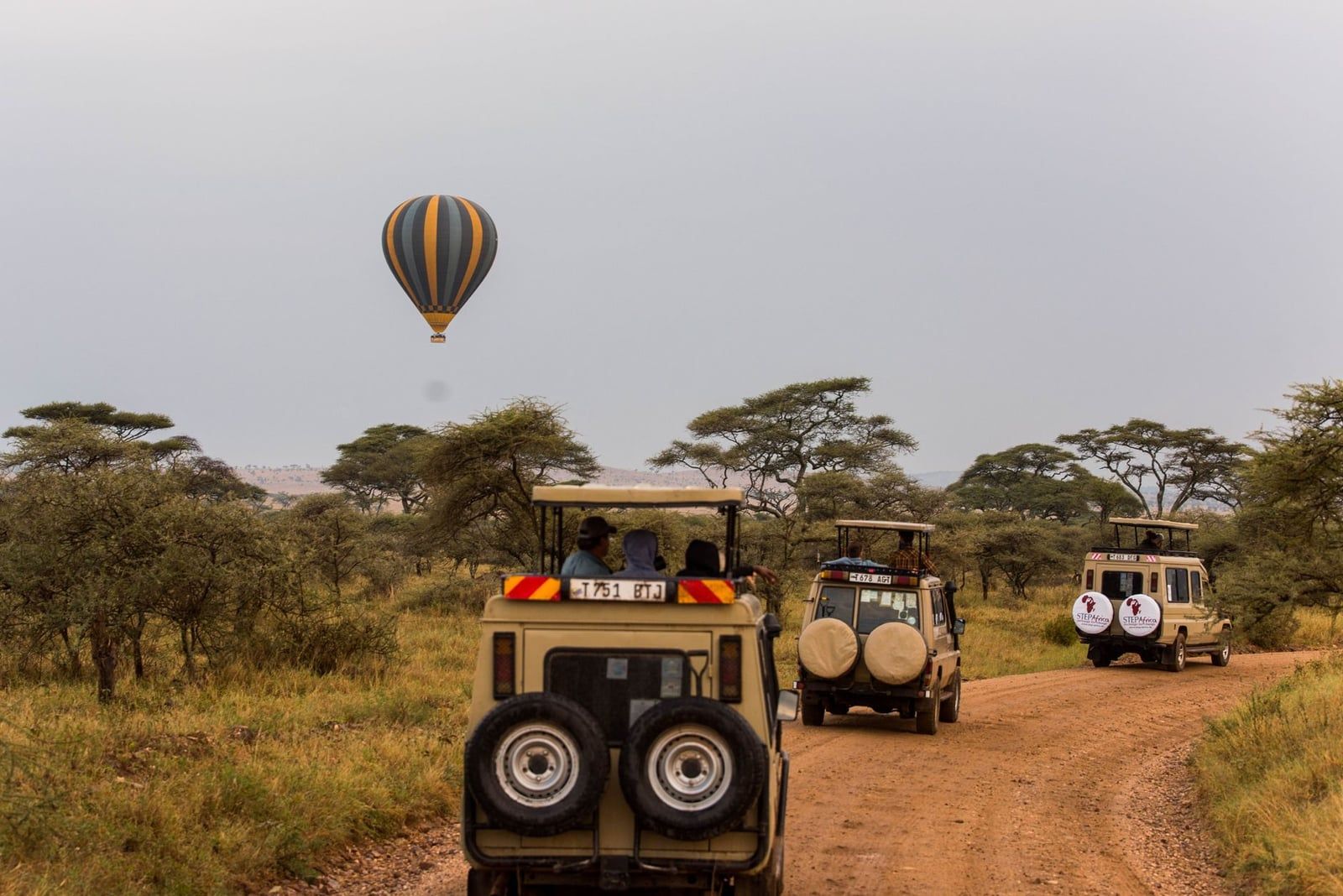
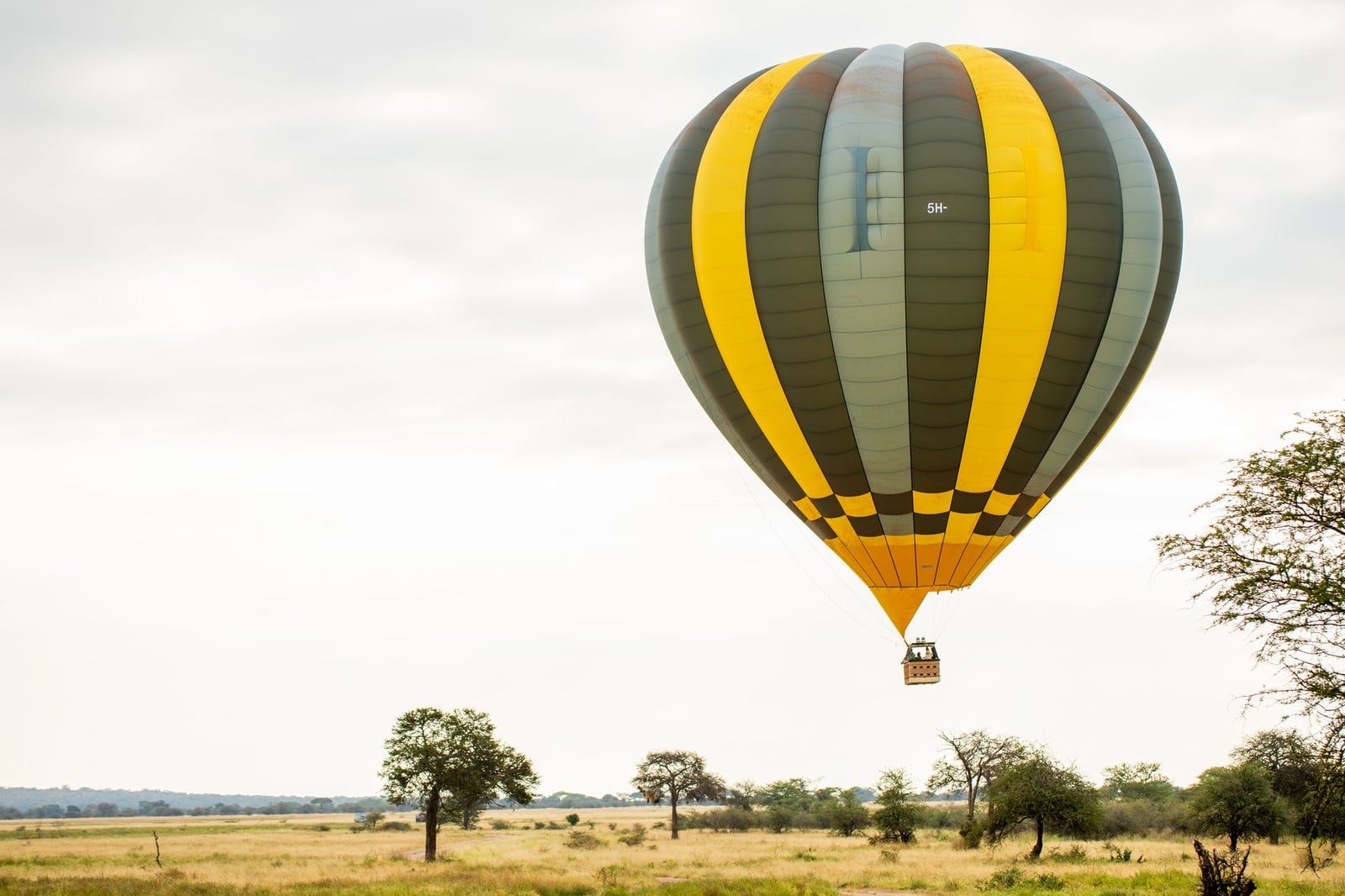
Balloons launch at sunrise and drift over the silver ribbon of the river and the golden grassland, herds below, then land for a bush breakfast. TANAPA charges a US$40 per-trip operation fee, built into operator pricing, and flights only run through licensed operators booked well ahead. Go June to October, when the animals are concentrated along the river and dawn skies are clear. It's expensive, and the game drive you skip for it probably finds more animals — but nothing else puts 300 elephants beneath you that quietly.
6. Maasai Cultural Visits
The villages around the park's eastern boundary arrange visits that go past the gift stall: you walk a family homestead, see the school and health centre, and buy beadwork directly from the women who make it. Most lodges and operators can set this up as a half-day between drives. Mto wa Mbu, an hour up the road toward Lake Manyara, makes a good alternative stop — a market town of over 100 ethnic groups, with plantation tours and bike rides toward the lake shore.
7. Photography Safaris
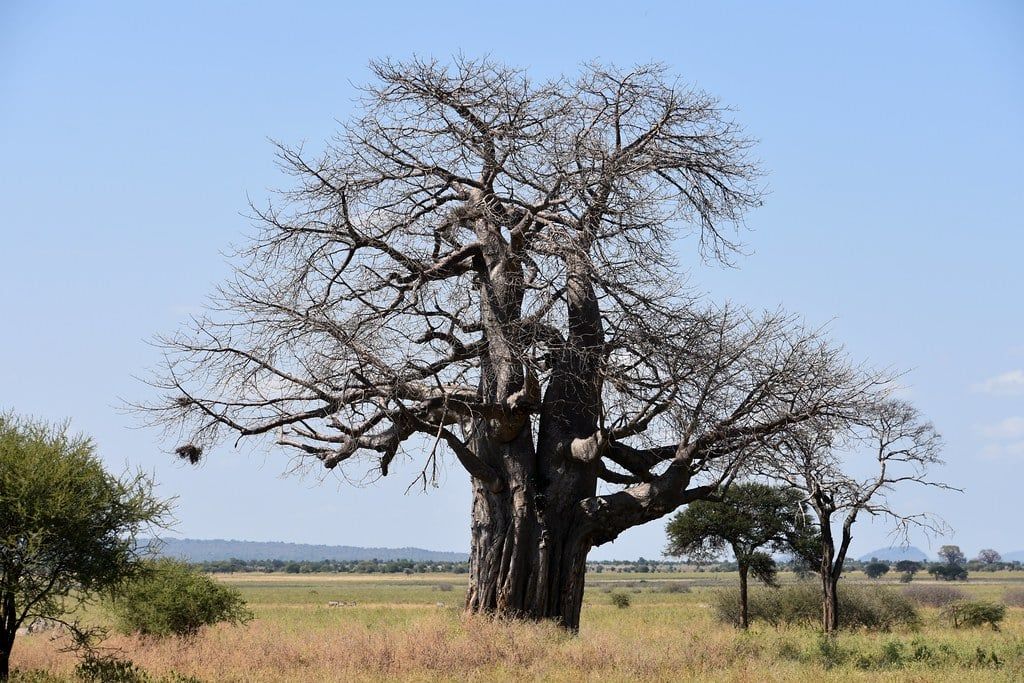
The baobabs are the shot. Trees up to 3,000 years old, trunks over 100 ft in circumference, silhouetted against the evening light along the main river track — with elephants stripping their bark right in frame. The 6 am start gives you clean light and active animals, and the open woodland means subjects come close enough that you don't need a 600mm lens. One rule to know: drones are banned in all TANAPA parks without permits that take months to process and are rarely granted. Leave it at home.
8. Slow Safari Extras: Fly Camping and Picnics
Fly camping pitches simple mobile tents in a remote corner of the park for a private night — fire, bedrolls, and the bush at full volume until dawn. It requires prior booking with park HQ and suits travellers already spending a couple of nights in Tarangire. Cheaper and easier: lunch at Matete Picnic Site, 14 km from the main gate, a clifftop above a river crossing where elephants climb from the water while you eat. It has an ablution block, which matters by day three of any safari.
Wildlife and Birds: What You'll Actually See
Match your expectations to the calendar and Tarangire rarely disappoints. In the dry months the river guarantees the big stuff:
- Near-certain: elephant, buffalo, giraffe, zebra, wildebeest, impala, warthog
- Likely: lion, spotted hyena, dwarf mongooses at their termite mounds
- Possible, never promised: leopard, cheetah, African wild dog
- Dry-country specials: fringe-eared oryx, gerenuk, lesser kudu, eland
- Rhino: not a regular sighting here
The engine behind all this is the Tarangire migration. Every dry season, wildebeest and zebra funnel into the park from calving grounds across the roughly 20,000 km² ecosystem, because the river holds water when nothing else does — then leave again when the rains return. August is the densest month; June and late September deliver similar game with fewer vehicles. If the big herds are why you're coming, elephant-focused tours time their drives around the river crossings. For a full species rundown, see our guide to Tarangire National Park animals.
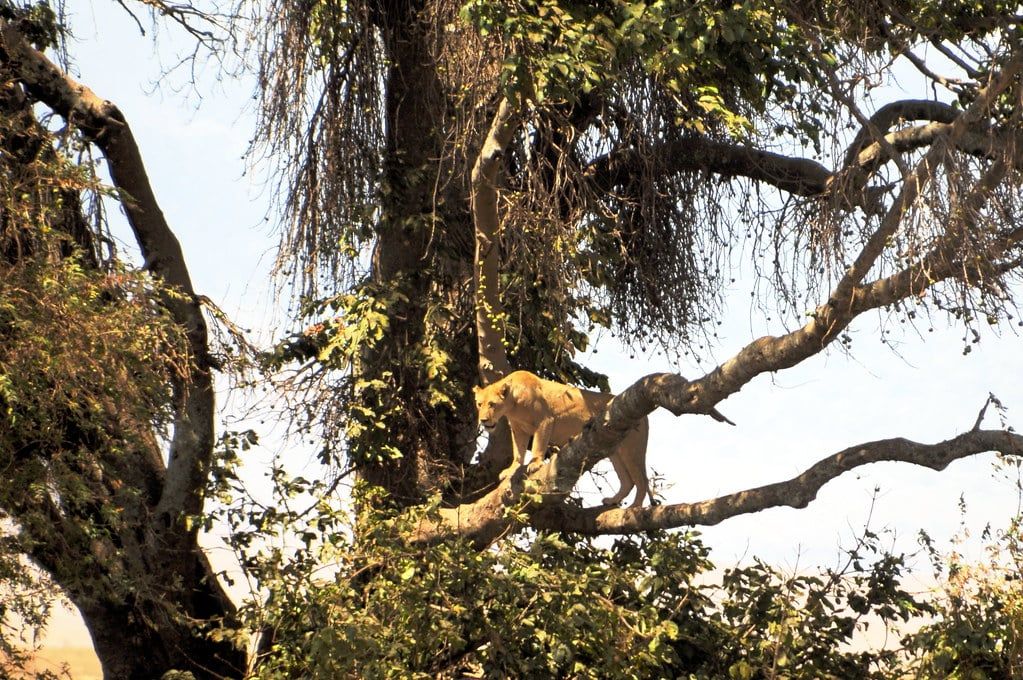
Tree-climbing lions live around Silale Swamp in the south, but catching one sprawled along a branch comes down to luck on the day — nobody can promise it. Lake Manyara, 70 km away, has the same habit with better odds if it's on your list.
Where to Go: The Park's Signature Attractions
Five areas cover everything above. Learn them and you can read any Tarangire itinerary at a glance:
- Tarangire River — the dry-season engine; elephants dig water from the sandy bed
- Silale Swamp — green year-round; big herds, tree-climbing lions, quiet southern roads
- Lemiyon Plains — open grassland at the gate; easy first-hour viewing
- Baobab plains — home of Poacher's Hide, the park's most famous tree
- Kitibong and Boundary hills — buffalo country west, community land east
The river and Lemiyon fit a day trip. Silale and the southern tracks reward a second day — most day-trippers never get that far, which is exactly the point. Kitibong, out west, is the place for buffalo herds; Boundary Hill, in the east, is where the park meets Maasai grazing land.
Best Time to Visit Tarangire (By Activity)
July to October is peak wildlife: the migration is in, the bush thins, and herds stack up at the river. November to May flips the script — fewer large animals, but migrant birds, calving outside the park between January and March, and lodge discounts. Mid-March to May is the long-rain window: mud, some camps closed, and entry drops to US$45 plus VAT.
| Activity | Jun–Oct | Nov–Dec | Jan–Feb | Mar–May |
|---|---|---|---|---|
| Game drives | Peak; thin bush, herds at the river | Good; short rains, fewer vehicles | Good; hot, calving begins outside | Tough; mud, dispersed game |
| Elephants & migration | Peak; herds up to 300, July–Oct influx | Dispersing | Dispersed outside the park | Dispersed |
| Birding | Residents only | Migrants arrive | Migrants plus breeding plumage | Peak species, heavy rain |
| Night drives & walks | Best months | Possible between showers | Possible; very hot | Limited by track conditions |
| Balloon flights | Best; clear dawn skies | Possible | Hazy mornings | Least reliable |
| Costs | Peak entry US$50+VAT | Peak entry US$50+VAT | Peak entry US$50+VAT | Low season US$45+VAT; discounts |
Days run 25–30°C in the dry months, with nights near 15°C in July — pack a fleece for 6 am drives. January and February push 38°C at midday, so plan drives for the shoulders of the day and sleep through the heat.
Planning Your Visit: Days, Getting There, Costs & Practicalities
Everything you need to slot Tarangire into a northern-circuit trip: how long to stay, how to arrive, what it costs, and the rules that catch people out.
How Many Days
One full day on a 12-hour day-trip permit covers the river circuit and Lemiyon Plains — that's what most Arusha day-trippers do. Two nights is the sweet spot: you add Silale, dawn and dusk drives, and lose the midday rush back to the gate. Take three if night drives, walks or fly camping matter to you, since those need advance bookings and slack in the schedule. A private safari makes the extra days pay, because the vehicle and guide run on your clock rather than a group's.
Getting There
From Arusha it's 121 km on tarmac via the Great North Road through Makuyuni — about two hours to the main gate. Kilimanjaro International Airport is roughly 160 km and three hours, usually with a first night in Arusha or a straight drive out on a morning arrival. Kuro Airstrip inside the park takes scheduled light aircraft — Coastal Aviation, Auric Air, Air Excel and Flightlink — 30–40 minutes from Arusha at roughly US$150–300 one-way, worth it mainly in the green season when roads slow down. The budget route is a shared minibus to the Makuyuni/Minjingu junction, then a taxi or motorbike to the gate; you still need a safari vehicle inside. Full detail is in our guide to getting there.
Costs
Park fees come from the official TANAPA tariff (2023/24, VAT-exclusive — 18% is added at the gate):
| Fee | Amount |
|---|---|
| Adult entry, peak season (16 May–14 Mar) | US$50 + 18% VAT (≈US$59) per day |
| Adult entry, low season (15 Mar–15 May) | US$45 + VAT (≈US$53) per day |
| Child 5–15 (under-5s free) | US$15 + VAT |
| Foreign-registered vehicle | US$40/day up to 2,000 kg; US$150 for 2,001–3,000 kg |
| Lodge concession (staying inside the park) | US$40 per adult per night |
| Night drive / guided walk | US$50 / US$20–25 per person |
On top of that, budget by safari style: a one-day trip from Arusha runs US$200–300 per person, multi-day budget safaris US$200–300 per person per day, and luxury camps US$400–500 and up. Gate payment is strictly electronic — card, TANAPA Smart Card or the TanapaGo app — and your passport is required. Fees change, so confirm rates before travel on our hours and fees page.
Safety and Health
Rules are enforced: stay in the vehicle, keep to the 50 km/h limit (overspeeding costs TSh 50,000), and never drive after dark outside a booked night drive. Elephants move through lodge and campsite grounds at all hours, so walk with an escort after dark and give bulls on the track room. Health comes down to two things. Malaria is present year-round, so take prophylaxis as your doctor advises, use repellent and cover up at dusk. And tsetse flies bite through the day — skip black and dark blue clothing and wear long neutral tones instead.
Pairing Tarangire with the rest of the circuit is trivial: Lake Manyara is 70 km away, Ngorongoro's rim about 150 km, and Tarangire and Serengeti combinations just need an overnight at Karatu between the two parks.
FAQs: Things to Do in Tarangire National Park
Is Tarangire worth visiting compared to the Serengeti?
Yes, for what it does best: dry-season elephant herds of up to 300, baobab scenery and 550+ bird species, at US$50 plus VAT entry against the Serengeti's US$70 plus VAT — with far fewer vehicles. The Serengeti still wins on sheer scale and the Great Migration, so many travellers do both.
How many days do you need in Tarangire?
One full day covers the river circuit and Lemiyon Plains on a 12-hour day-trip permit. Two nights is a comfortable minimum; take three if you want night drives, walking safaris and the quiet southern roads around Silale Swamp.
How much is the Tarangire entry fee?
US$50 per non-East-African adult per day in peak season (16 May–14 March), plus 18% VAT — about US$59 at the gate. Low season (15 March–15 May) is US$45 plus VAT. Children 5–15 pay US$15 plus VAT, under-5s are free, payment is electronic only, and staying at a lodge inside the park adds a US$40 per adult per night concession fee.
Can you do a walking safari inside Tarangire?
Yes, short ones: guided walks of 1–4 hours cost US$20 per person (US$25 for longer walks) with an armed ranger, booked in advance with park HQ; children must be 12 or over. Multi-day walking safaris run mostly in the private concessions bordering the park.
Are night game drives allowed in Tarangire?
Yes — Tarangire is one of the few Tanzanian national parks that allows them. They cost US$50 per adult and US$25 per child aged 5–15, start around 8 pm with a ranger and spotlight, and require advance booking with park HQ or a participating camp.
What is the best time of year to visit Tarangire?
June to October for peak wildlife and the Tarangire migration; August is the densest month. November to May suits birders, with migrants and breeding plumage, and January to March brings calving. Mid-March to May is wettest but quietest, with entry at US$45 plus VAT and lodge discounts.
Is Tarangire in a malaria zone?
Yes, year-round, with risk highest in the wet months. Take prophylaxis as your doctor advises, use repellent and bed nets, and cover up at dusk. Tsetse flies are a separate daytime nuisance — avoid black and dark blue clothing.
What is Tarangire National Park famous for?
Dry-season elephant gatherings of up to 300 along the Tarangire River, giant baobabs up to 3,000 years old, its own June–October wildebeest and zebra migration, 550+ bird species, and tree-climbing lions around Silale Swamp.