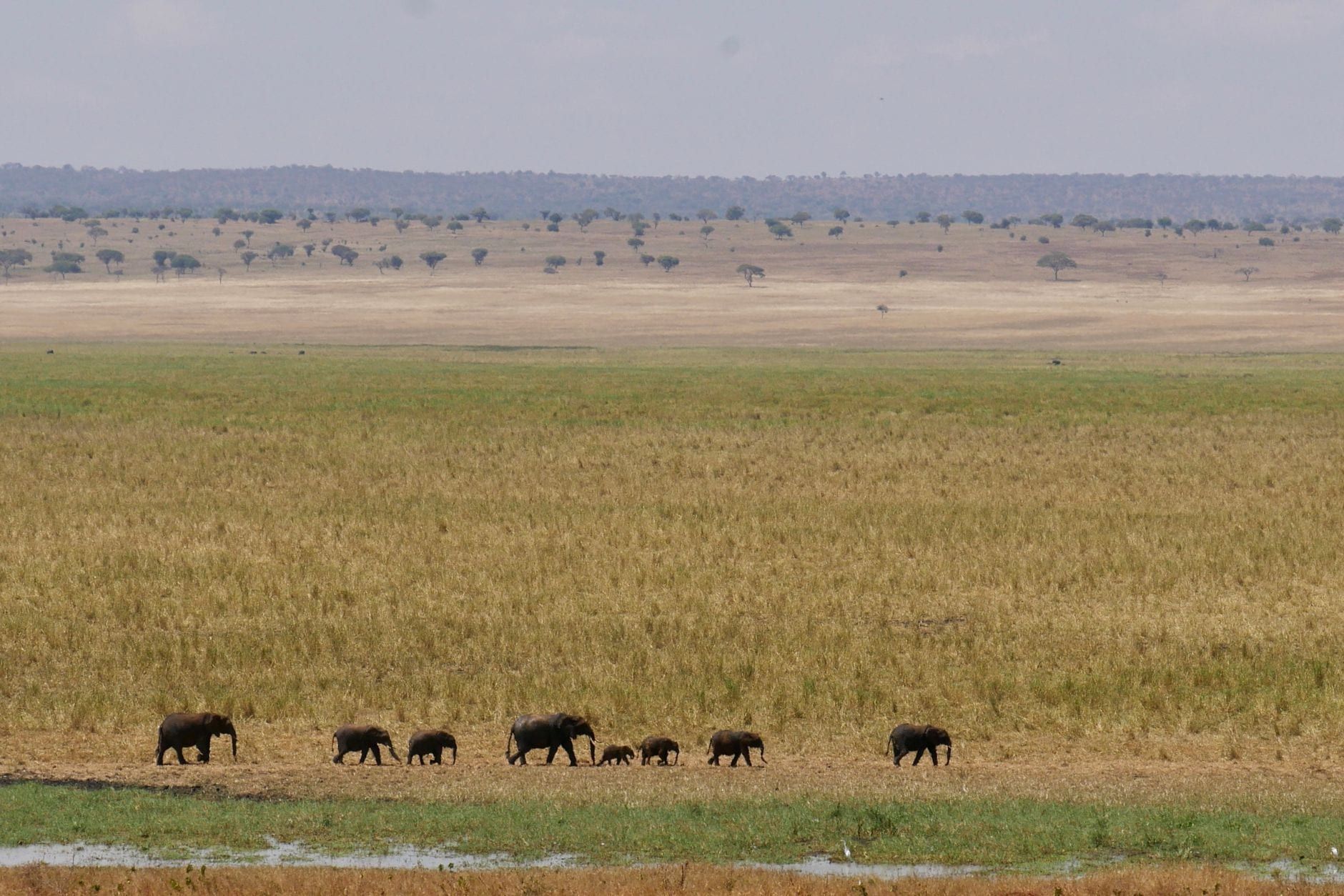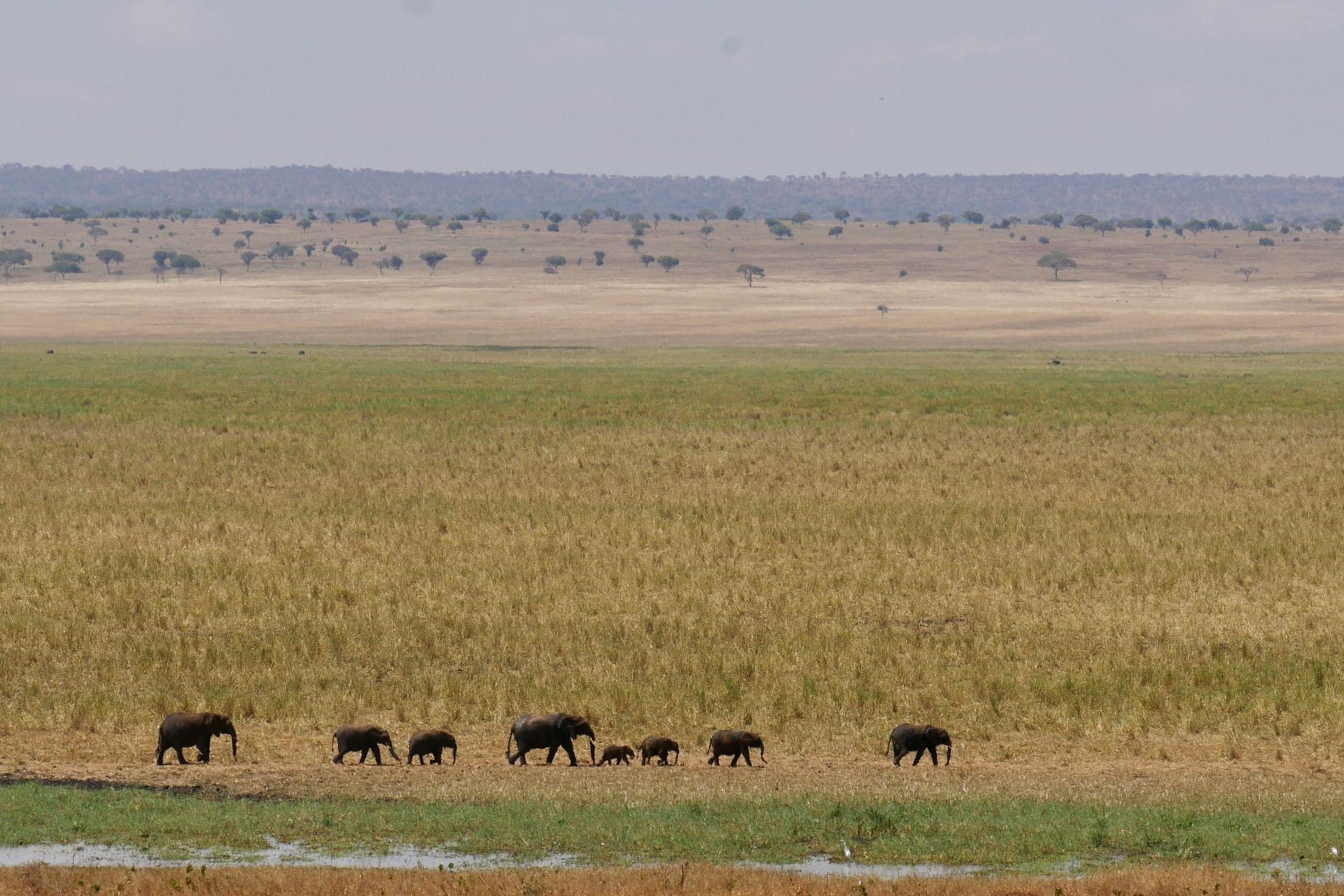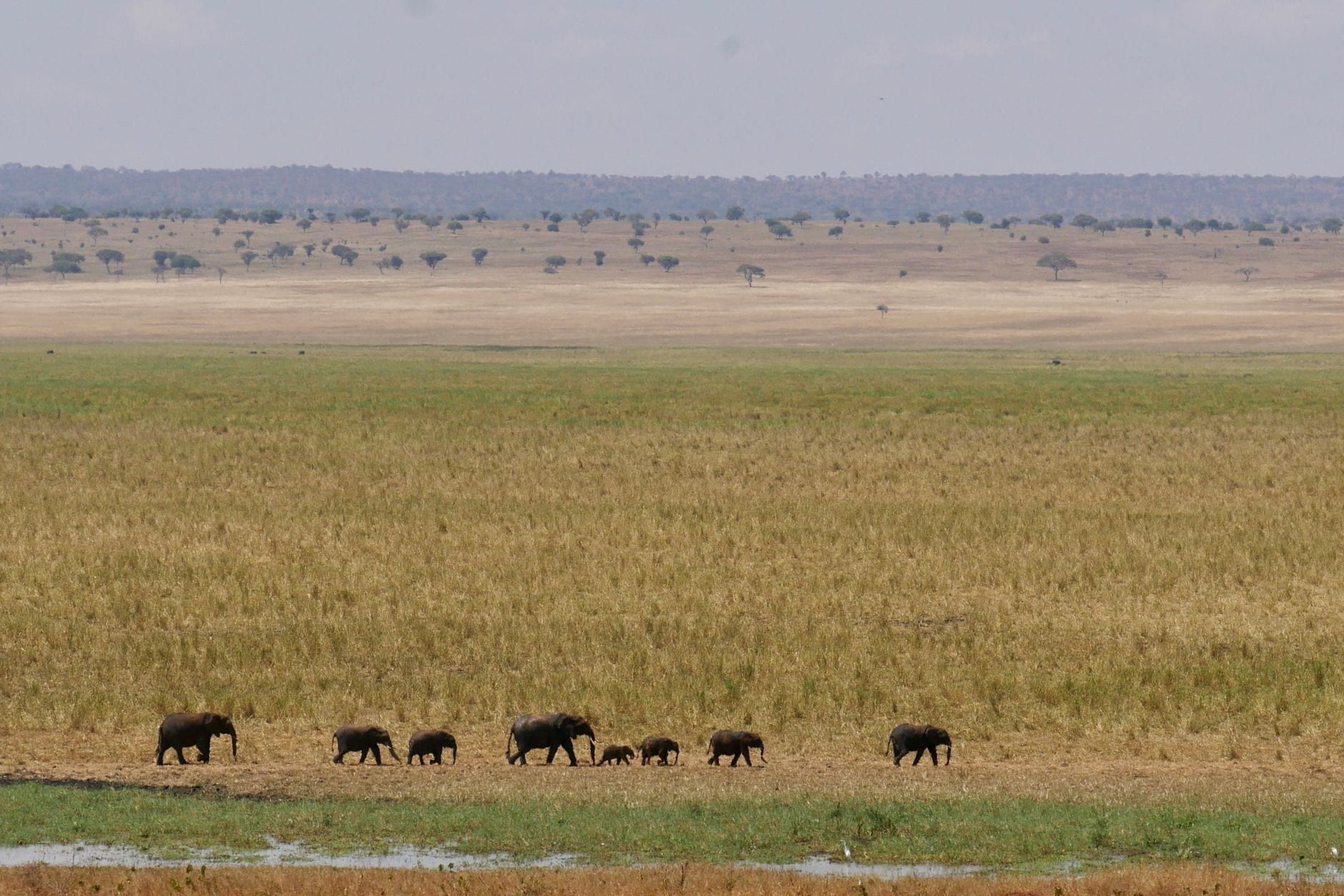
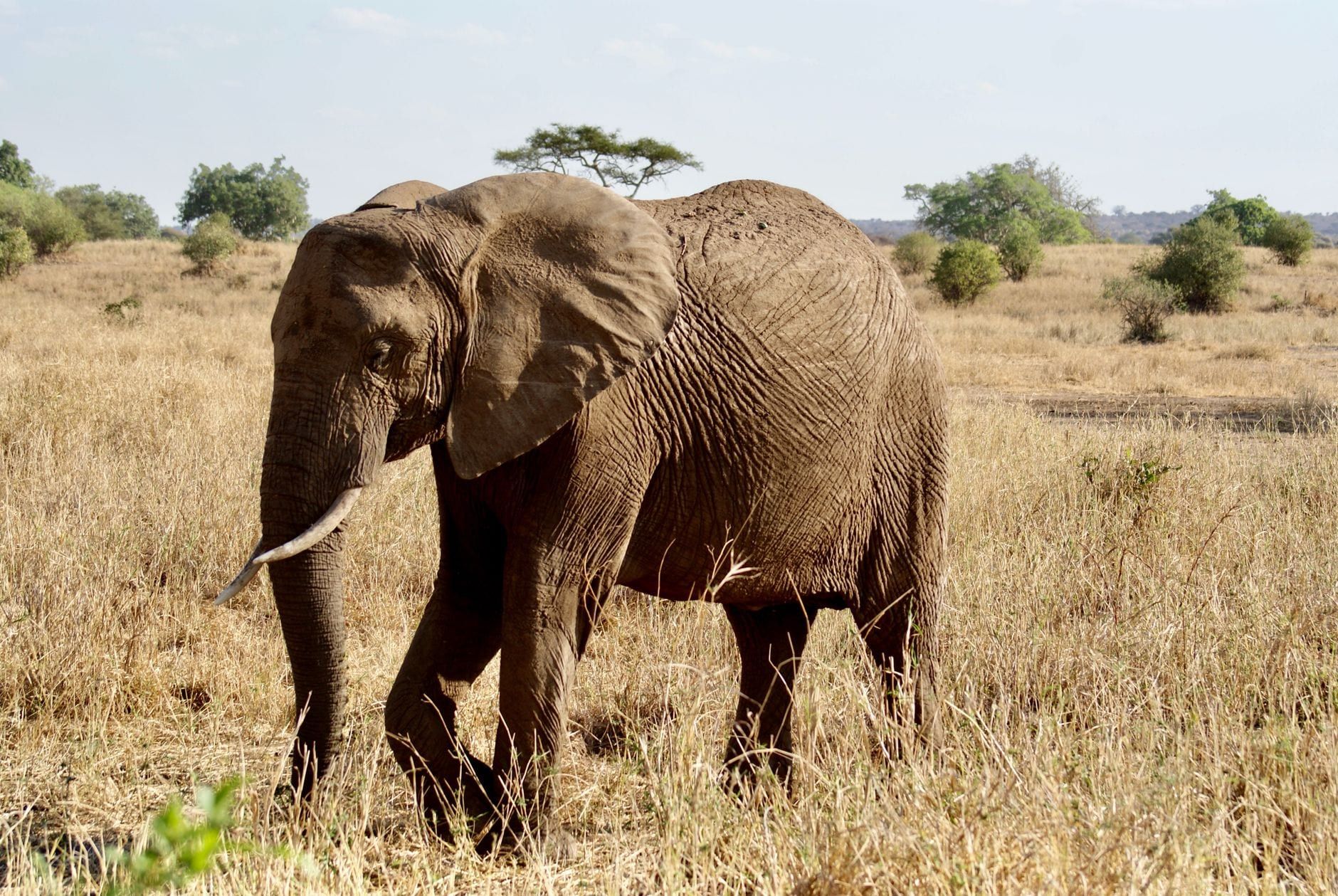
Tarangire National Park serves up the densest dry-season wildlife viewing in northern Tanzania with a fraction of the Serengeti's traffic. Gazetted in 1970, this 2,850 km² park of baobab woodland sits 121 km southwest of Arusha, anchored by the Tarangire River — the only reliable water for miles once the rains stop. Around 3,000 elephants walk old migration routes into that river valley between July and October, in breeding herds that can top 300 animals. This guide covers the wildlife you'll actually see, the best months, what entry costs, where to sleep, and how Tarangire fits a northern-circuit itinerary.
Why Choose a Tarangire National Park Safari
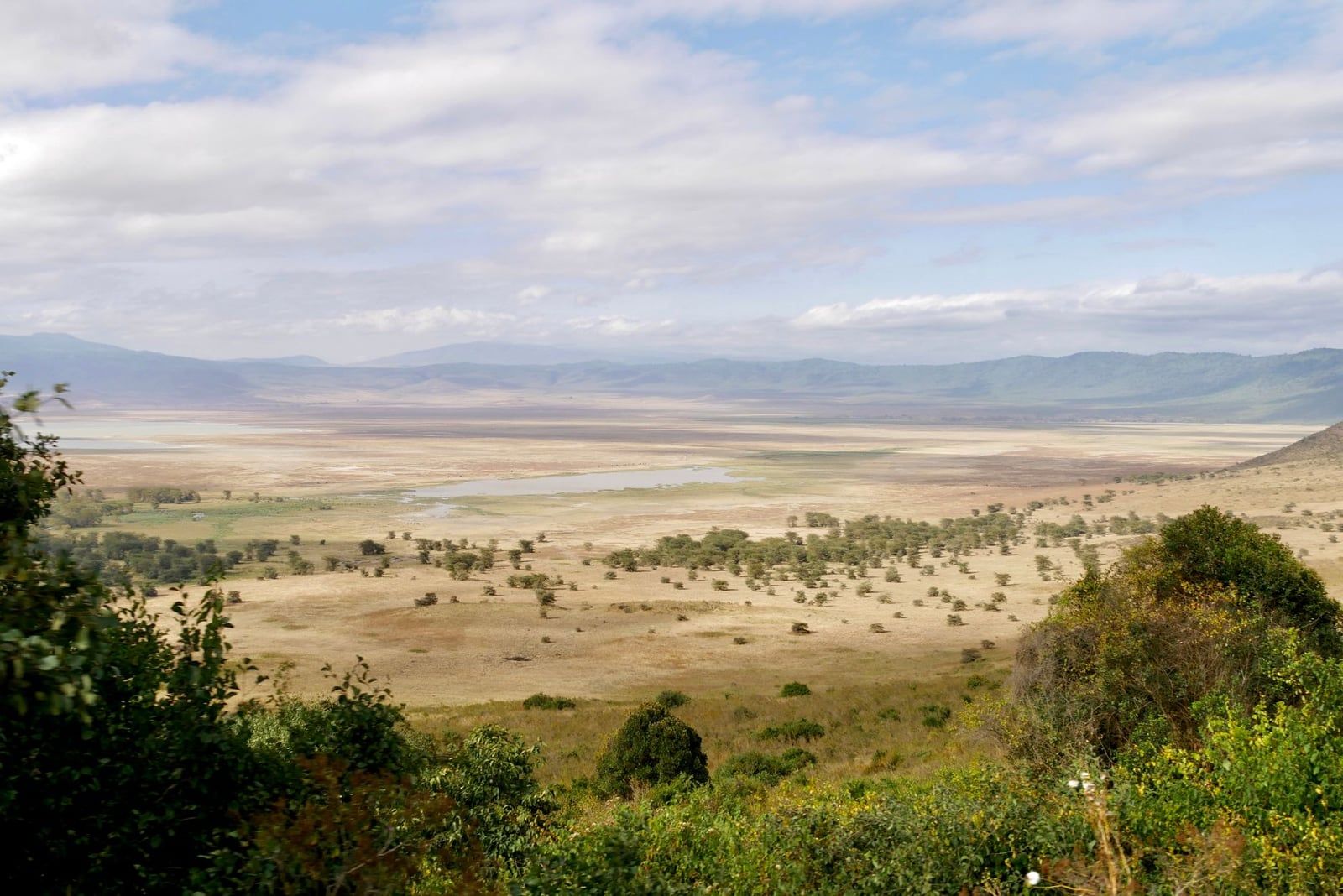
Pick Tarangire for elephants, baobabs and space. Tanzania's sixth-largest national park gets a fraction of the visitors that stream past it toward the Serengeti and Ngorongoro, yet in the dry season TANAPA itself bills it as the country's greatest concentration of mammals. The landscape explains the difference: instead of the Serengeti's endless plains or Ngorongoro's caldera walls, you get granitic ridges, river valleys, Acacia and Combretum woodland, and swamps — all of it studded with baobabs that can live up to 3,000 years and carry trunks over 100 ft around.
Those baobabs are the park's signature. Elephants strip their fibrous bark, and in evening light the giants stand out against golden grass along the main river track. Add dry-country antelope you won't find in the Serengeti's short-grass ecosystem and a bird list north of 550 species, and Tarangire earns its slot on almost any first-time itinerary. In 2012 the park recorded 161,792 visitors — the Serengeti's gate queues feel a world away.
- Elephant herds up to 300 strong at the river
- Ancient baobabs, some 3,000 years old
- 550+ bird species, including three near-endemics
- Gerenuk, fringe-eared oryx and both kudus
- Night drives and fly camping — rare in the north
- Far fewer vehicles than Serengeti or Ngorongoro
Wildlife on a Tarangire Safari: What You'll See
Elephants are the headline act, but the full cast runs from fringe-eared oryx to tree-climbing pythons. Here's an honest rundown, odds included.
The Elephant Migration
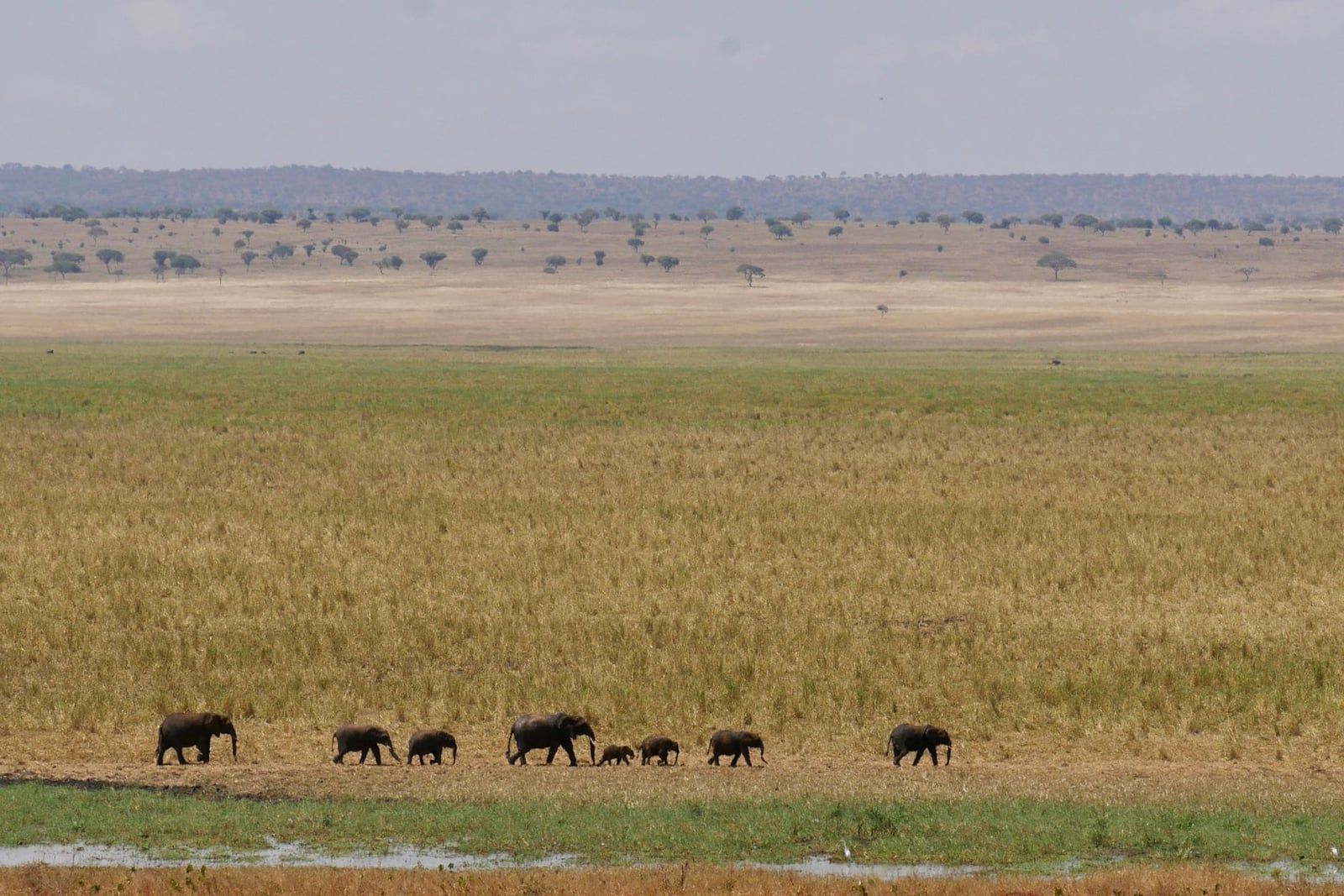
From June to October, water everywhere else dries up and the Tarangire River becomes the region's only sure source, pulling animals in from the surrounding dispersal areas. Around 3,000 elephants make that journey at the peak, joining a resident population counted at 2,385 in a 2000 aerial census — a number researchers found was growing fast after the poaching decades. Breeding herds line the banks in groups of up to 300, wobbling calves and big tuskers together. By late October, watch the bulls dig wells in the river sand to reach water below the dry bed. If elephants are the point of your trip, elephant-focused safari tours spend their game-drive hours exactly here.
Dry-Country Antelope
Tarangire's woodlands hold specialist antelope that most northern-circuit visitors never see. Gerenuk stand on their hind legs to browse acacia leaves; fringe-eared oryx, greater and lesser kudu, and eland all occur here and are scarce or absent further north. Wildebeest and zebra arrive on their own migration from July, massing around the Silale Swamp fringes with the buffalo herds.
Predators and the Big Five Question
Lion and buffalo are common and you'll likely find both within a day. Leopards are present but elusive — over a three-day stay a sighting is likely, never guaranteed. Cheetah are genuinely rare. African wild dog, hyena and jackal round out the list, with wild dog a genuine if lucky bonus. The honest bit: there are no rhino in Tarangire, so the Big Five cannot be completed here. If a rhino sighting matters to you, build in the Ngorongoro Crater, where black rhino are regularly seen. For a deeper species-by-species breakdown, see our guide to Tarangire's animals.
Curiosities Worth Watching For
Around the swamps you may spot pythons draped in trees — a habit almost unique to this park's snakes. A rare leucistic (white) giraffe was photographed here in 2015, and in 2018 the park's elephants produced the oldest known mother of twins on record. Abandoned termite mounds shelter dwarf mongoose and pangolins. None of these are promised; all of them are possible.
Birding in Tarangire: 550+ Species and Counting
More than 550 bird species have been recorded in Tarangire, and the swamps hold one of the largest numbers of breeding bird species anywhere in the world. The Acacia woodland and swamp edges produce the park's three near-endemics — yellow-collared lovebird, ashy starling and rufous-tailed weaver — alongside Kori bustards, ostrich, secretary birds, open-billed storks and crowned cranes. Flocks of lovebirds around a waterhole are a dry-season fixture.
Birders should travel against the crowd. From November to May, migratory species swell the list, and the green season's low rates and empty tracks suit a slow, binoculars-up pace. Even on a big-game safari, pack binoculars — the lovebirds and starlings move fast, and half the park's interest sits above eye level.
Best Time for a Tarangire National Park Safari
Go June to October, and within that window July to October is prime. The dry season works a simple mechanism: every seasonal water source in the ecosystem vanishes, so wildlife funnels toward the Tarangire River and Silale Swamp. Vegetation thins, mosquitoes drop, and skies stay clear for photography. August brings the highest density of animals; June and late September to October deliver similar game with fewer vehicles at the sightings.
The green season, November to May, reverses the trade. Game disperses as water spreads out, grass grows tall, and densities drop — but the park goes quiet, lodges cut rates, migratory birds arrive, and newborn animals appear. Entry fees fall too: TANAPA's official low season runs 15 March to 15 May, when adult entry drops to US$45 plus VAT (about US$53.10).
One real caveat: mid-March to May, the long rains. Much of the wildlife moves out of the park entirely — the black cotton soil is bad for their hooves — tracks turn to mud, and some camps close. First safari, big-game priorities: book July to October. Return visit, birds or budget: November to December's short rains are the better green-season window.
Safari Activities in Tarangire Beyond the Classic Game Drive
Tarangire has the widest activity menu of Tanzania's northern parks, but access rules trip people up: the walks and night drives depend on where you stay and require advance booking. Here's what's actually on offer, and how to unlock it.
Game Drives
Be at the gate for the 6:00 am opening. Predators are still moving in the cool hours, the light is at its best, and a day-trip permit covers 12 daylight hours — enough for the river circuit, the swamps and a picnic stop. Late afternoon is the second good window. Bring binoculars and a camera with reach; the golden-hour drives along the river track, with baobabs backlit and herds crossing, are the park's best photography. For a fuller rundown of options, our things-to-do guide covers the park plus the surrounding conservancies.
Night Game Drives
Tarangire is one of the very few parks on the northern circuit where night drives exist — most TANAPA parks ban driving after dark. With a ranger and a spotlight, typically from around 8:00 pm, you find genets, civets, bushbabies, leopards on the move and sometimes lions hunting. The activity fee is US$50 per adult, US$25 per child aged 5–15, booked with park HQ or arranged through lodges such as Ang'ata Tarangire and Tarangire Safari Lodge.
Walking Safaris
Walking is not permitted inside the national park itself. Walks run on the private concessions bordering it, led with an armed ranger, and cost US$20 per person for 1–4 hours (US$25 for longer). On foot you read tracks, inspect termite mounds and grasp the true scale of a baobab in a way no vehicle allows. Children must be 12 or over.
Fly Camping and Balloon Flights
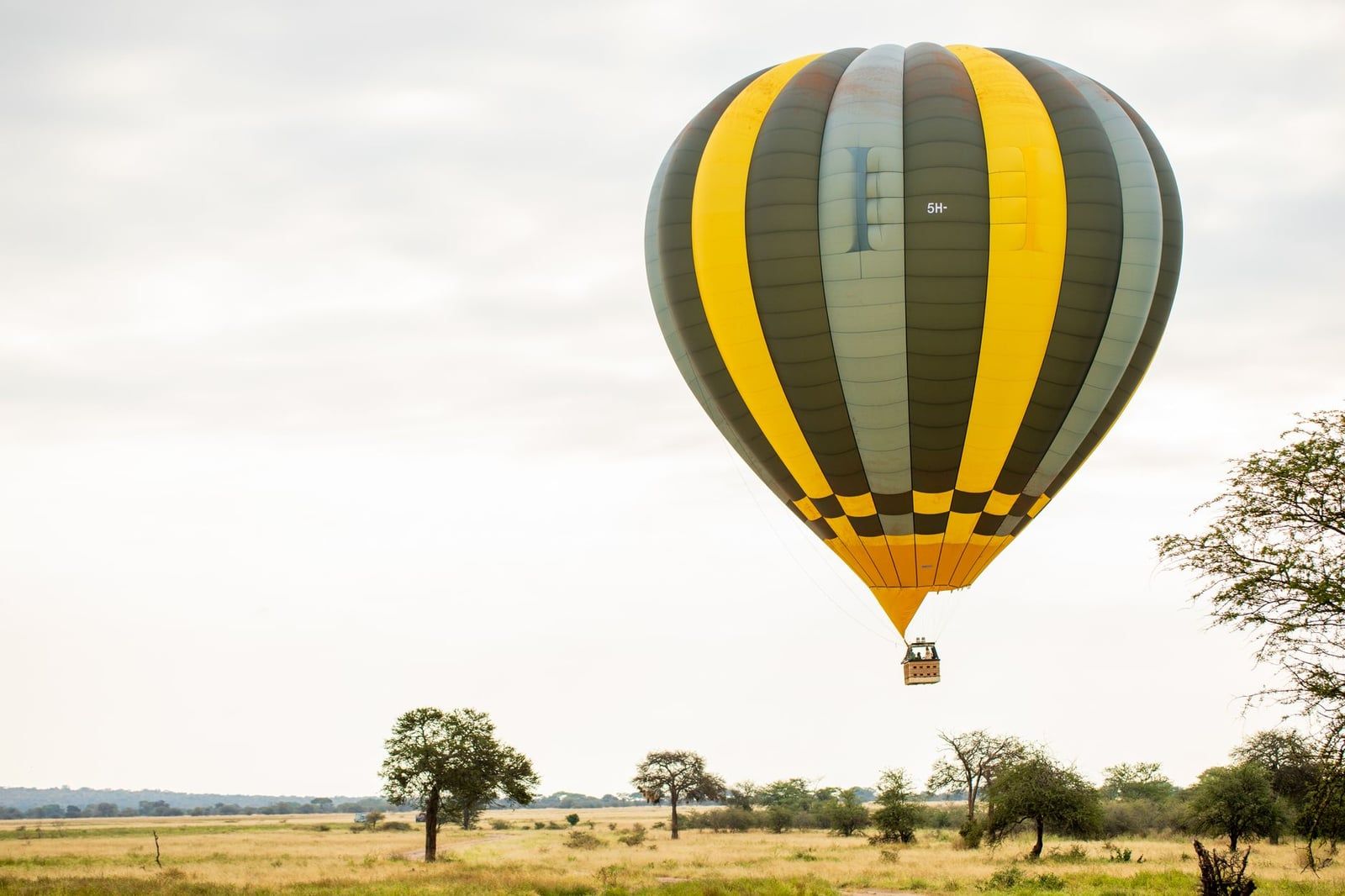
Two splurges round out the menu. Fly camping beds you down at a simple satellite site — bucket shower, canvas cot, campfire — for a genuinely quiet night in the bush; it requires prior arrangement with park HQ. Hot-air balloon flights launch at dawn over the river and swamps, with animals gathered below in their hundreds; TANAPA levies a US$40 balloon operation fee that's built into operator pricing. Book both well ahead.
Where to Stay in Tarangire
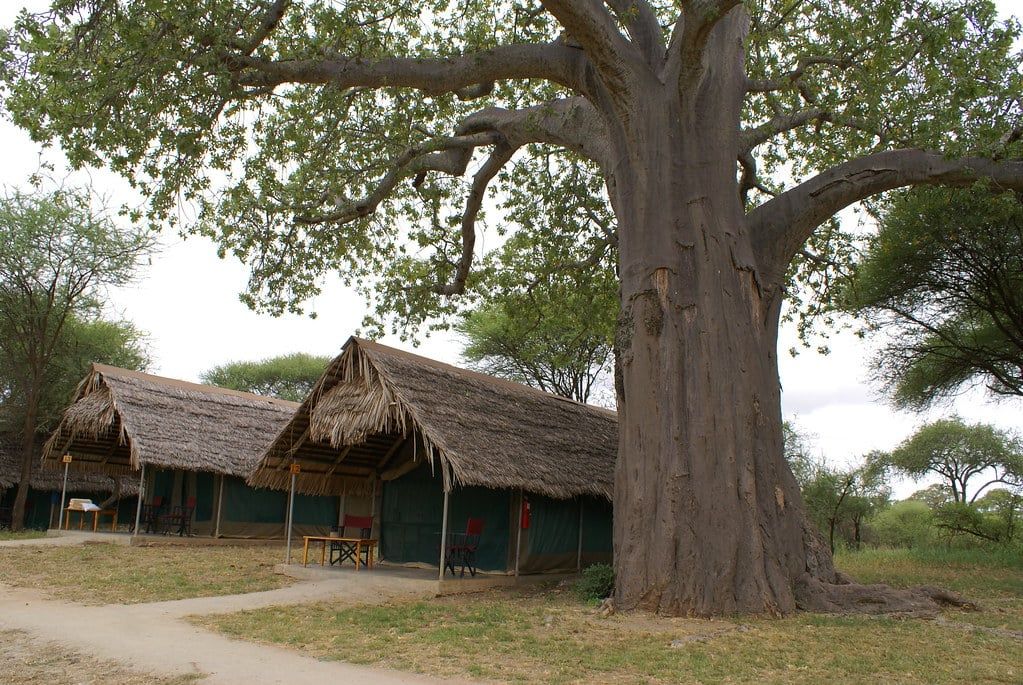
Match your sector to your priorities. The northern sector, near the main gate and the river, holds most lodges and gives the quickest access to the dry-season action — it's also where the July and August traffic sits. The southern sector around Silale Swamp is the park's wild half: remote, walking-focused camps, few vehicles, and the true wilderness feel. Budget travellers base outside the gate at public campsites and mid-range tented lodges, entering each morning.
Indicative per-person sharing rates tell the spread: public campsites from about US$30 per night, Tarangire Sopa Lodge from around US$240, Oliver's Camp from US$870, Tarangire Treetops from US$871, and Sanctuary Swala from US$1,250. Mid-range options like Burunge Tented Lodge and Tarangire Safari Lodge sit between the campsites and the top-end camps, and the latter also arranges night drives and walks. Staying inside the park at a private lodge adds a US$40 per adult per night concession fee on top of entry. Our lodges guide compares the properties in detail.
One decision rule: if night drives or walking safaris are why you're here, book a lodge or concession camp that runs them — Ang'ata Tarangire and Tarangire Safari Lodge in the north, or the southern camps — rather than assuming any stay can arrange them on arrival.
Tarangire Safari Costs: Park Fees & Budgeting
Budget entry first, because it's the cost most safari quotes bury. Current TANAPA tariffs charge non-East-African adults US$50 per day plus 18% VAT — about US$59 at the gate — in peak season, dropping to US$45 plus VAT (about US$53.10) from 15 March to 15 May. Children aged 5–15 pay US$15 plus VAT (US$17.70); under-5s enter free.
| Category | Peak (16 May – 14 Mar) | Low (15 Mar – 15 May) |
|---|---|---|
| Non-EA adult (16+) | US$59 incl. VAT | US$53.10 incl. VAT |
| Non-EA child (5–15) | US$17.70 incl. VAT | US$17.70 incl. VAT |
| Child under 5 | Free | Free |
| East African citizen | TSh 10,000 | TSh 10,000 |
| Expatriate resident | US$25 | US$25 |
Vehicles pay separately: US$40 per day for foreign-registered vehicles up to 2,000 kg, US$150 for 2,001–3,000 kg, with open-sided vehicles adding 50%. Camping runs about US$30 per adult per night at public campsites and US$50–60 at special sites, which need advance booking. Activities cost extra too — the US$50 night drive, US$20 walk and US$20 per-group ranger fee all sit outside entry. None of this covers accommodation, balloon flights or transport; ask your operator in writing which fees the package includes, and check our hours and fees page before you travel.
Two payment rules catch people out. First, the gates are cashless — credit card, pre-loaded TANAPA Smart Card or the TanapaGo app only, and your passport is mandatory at the gate. Second, permits run on a clock: a day-trip permit is valid 12 daylight hours, a sleep-over permit 24 hours, and if you sleep outside the park you pay entry again each visit. TANAPA revises fees annually and fee information online is often wrong, so carry buffer funds.
Planning Your Tarangire Safari: Getting There, Trip Length & Northern-Circuit Fit
The standard arrival is a road transfer: 121 km from Arusha on tarmac, about two hours to the main gate. Most international visitors fly into Kilimanjaro International Airport (JRO), roughly 160 km and three hours away via Arusha. Light aircraft are an alternative — scheduled bush planes from Coastal Aviation, Auric Air, Air Excel and Flightlink land at Kuro Airstrip inside the park in 30–40 minutes from Arusha, at roughly US$150–300 one-way. Flying earns its price in the green season, when roads slow down. Our directions guide covers every route in detail.
| Destination | Distance | Drive time |
|---|---|---|
| Arusha | 121 km | ~2 hours |
| Lake Manyara National Park | 70 km | ~1.5 hours |
| Ngorongoro Crater rim | ~150 km | ~2 hours |
| Serengeti National Park | ~225 km | ~6 hours via Ngorongoro |
Trip length: one night is the sensible minimum if Tarangire is a day stop between parks. Two nights is the sweet spot — a 15-year park veteran of a guide recommends one day in the busy north and one in the remote south. Three nights if walking safaris, night drives or birding drive the trip, or if you simply want slow mornings at the river.
Against the big names, Tarangire is complementary, not competing. The Serengeti delivers the Great Migration and vast predator territory at scale; Ngorongoro packs roughly 25,000 large animals into a crater you can drive across in a morning; Tarangire gives you elephant herds, baobabs, dry-country antelope and breathing room. First-timers usually include all three — Tarangire first or last, with an overnight at Karatu or Mto wa Mbu between parks to avoid backtracking. Pairing it with the Serengeti works so naturally that combined Tarangire–Serengeti tours are the most common booking; a private vehicle makes the multi-park run easiest for families and photographers.
Cultural add-ons slot in on transfer days. Mto wa Mbu, an hour away, runs plantation and village tours with local food and banana beer. Maasai village visits and the Lake Eyasi Hadzabe hunter-gatherer experience both work as half-day stops. Closest of all is the Burunge Wildlife Management Area on the park's northern boundary, where lakeshore camps offer village-run walks and night drives outside the national park.
Frequently asked questions
How many days do you need for a Tarangire safari?
One night is the minimum and a full-day game drive covers the river circuit. Two nights allow a relaxed pace — one day north, one day south — and three nights suit trips built around walking safaris, night drives or birding.
Can you see the Big Five in Tarangire?
No — there are no rhino in the park, so the Big Five is impossible here. Lion and buffalo are common, leopard is realistic over a three-day stay but not guaranteed, and cheetah are rare. Ngorongoro Crater, two hours away, has black rhino.
What is the best month for a Tarangire National Park safari?
July to October, the peak of the dry season, when around 3,000 elephants and the Tarangire migration of wildebeest and zebra concentrate along the river and Silale Swamp. The green season from November to May trades game density for birding, newborn animals and lower rates.
How much are Tarangire National Park entrance fees?
Non-East-African adults pay US$50 plus 18% VAT — about US$59 — per day in peak season, or about US$53.10 in low season (15 March to 15 May). Children 5–15 pay US$17.70, under-5s are free, and East African citizens pay TSh 10,000. Payment is electronic only and TANAPA revises rates annually.
Can you do a night safari or walking safari in Tarangire?
Yes to both, with conditions. Night drives cost US$50 per adult and are one of the few available in northern Tanzania, arranged through park HQ or lodges such as Ang'ata Tarangire and Tarangire Safari Lodge. Walking safaris are not permitted inside the park itself — they run on bordering private concessions with an armed ranger, costing US$20–25.
How do you get to Tarangire National Park from Arusha?
By road, roughly two hours on tarmac, 121 km to the main gate. Most visitors fly into Kilimanjaro International Airport first, about three hours away by road. Light aircraft also land at Kuro Airstrip inside the park in 30–40 minutes from Arusha.
Is Tarangire worth visiting compared to the Serengeti?
The two are complementary. Tarangire offers giant elephant herds, baobabs, 550+ bird species and far fewer vehicles; the Serengeti offers the Great Migration and predator action on a vast scale. Most first-time itineraries include both, and Tarangire sits just two hours from Ngorongoro.
Is Tarangire National Park in a malaria area?
Yes, it's a year-round malaria zone. Take prophylaxis as advised by your doctor, use repellent and long sleeves at dawn and dusk, and sleep under a net. Tsetse flies are also a daytime nuisance — avoid black and dark blue clothing.